
By LESLEY PARTRIDGE
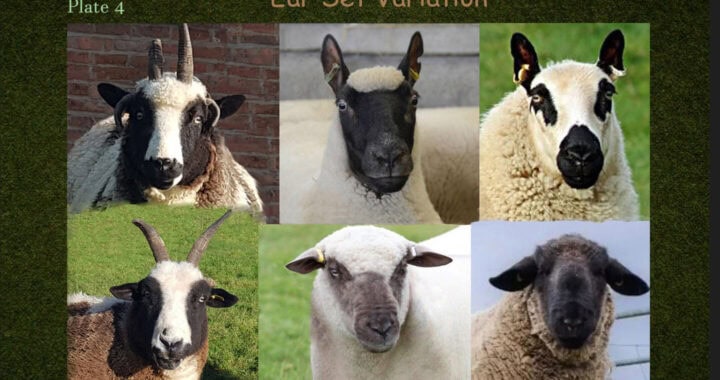
 When we investigate the basis of tameness, ears can be good indicators of emotions. It can be seen that an animal’s ear set shows it’s flight or fight instinct. Wild animals which have dominant pricked ears, signify heightened awareness, and their straight pointed ears give full access to the ear canal allowing them to hear without any restrictions. These types are more sensitive and have evolved for a quick get away from the danger of predators.
Animals with a lower ear set show man’s selection over hundreds of years by choosing to keep animals which are easier to manage. Animals with white areas on the body have distinctly calmer temperaments when compared to those having solid colour, and piebald colour is found in many domesticated species of horses, sheep, cattle, dogs, cats, and birds. The selection for a calmer temperament causes the Adrenal Gland in animals to produce less Adrenalin.
 Scientists know that the two sides of the brain collaborate to perform a variety of tasks and that the two hemispheres communicate through the corpus callosum. The left side controls the muscles on the right side of the body, while the right hemisphere controls those on the left. Left brain thinkers are ruled by logic and pay attention to detail, whereas right brained are described as being more emotional. Both sides process information differently and control different patterns of behaviour, known as lateralization.
Lateralization in sheep’s brains carry out different functions simultaneously such as grazing but keeping an eye out for predators. The right side of the brain develops earlier and is specialised for expressing intense emotion, while the left is influenced by its surrounding environment. Observing the way they behave, we know that Jacob sheep are sociable animals, intelligent, easily trained, exceptionally adaptable and enjoy the interaction and company of humans.