Wales Autumn 2025

WALES REGION

Regional Contact member – Alison Ross

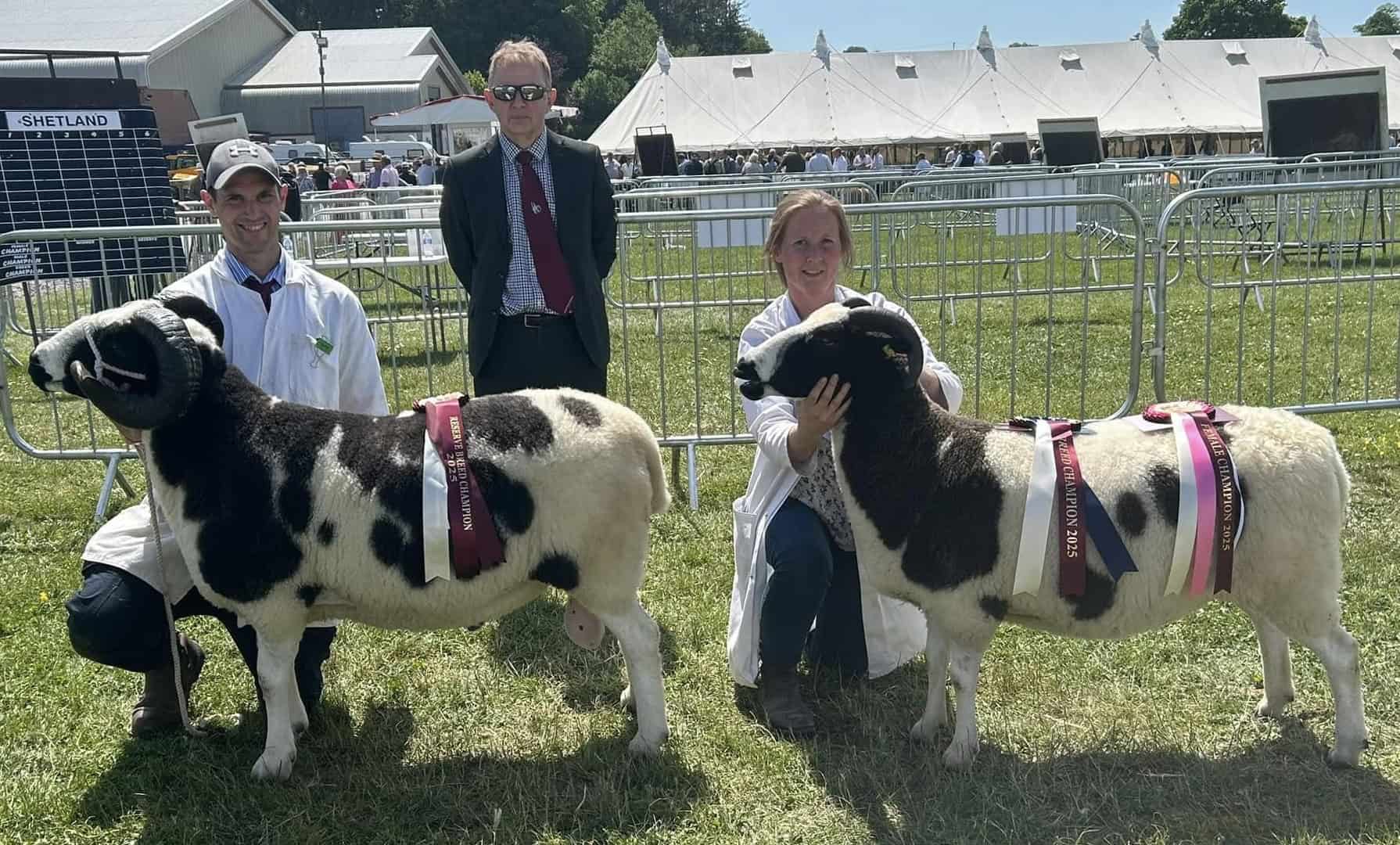
The show season commenced with the RWAS Spring Festival in Llanelwedd, Builth Wells. It was good to see some new members showing their sheep alongside some of our more experienced show goers. Show results are at the back of this Journal. The breed stand proved very popular with the public and we had quite a few enquiries and heard some interesting stories from previous owners. Once again, I would like to thank Joanne Jones and her family for all their hard work in planning, setting up and manning the stand. The stand was runner up in the breed stand competition, well-done Jo.

C:\Users\Clive\Downloads\Wales reprot 1.jpg

On the 8th of June we held an open day in Ceredigion kindly hosted by Denise and Nigel Doney with the Woodleigh and Gwenerin flocks represented. Denise joined the JSS last year and it was wonderful to see her enthusiasm to throw herself in to all things Jacob despite a challenging year for her and Nigel. The Evans family needs no introduction as they are often seen in the winning line up at shows with their Gwenerin flock, Gwenllian has been extremely successful in the young handlers’ classes and gave a demonstration ably assisted by Harri Morris. Our thanks to Gwenerin and also to Angharad and John who just quietly got on with producing extra hurdles and a sheep stand without any fuss or bother. We were treated to a master class in trimming a Jacob sheep by Owain Jenkins with his smart young tup. Owain showed us how this differs from producing a continental show sheep and gave us some useful tips on finishing touches. Many thanks Owain.

After a Bring and Share lunch, Jackie Jones gave us a brief history of her membership of the JSS with the Milldale Flock number 00302. This was followed by a Q&A session, which gave those attending a chance to give their ideas on events they would like to see in Wales. I would like to thank all those who contributed to making this a successful and enjoyable day including all of those who attended, with some travelling from a fair distance away.

C:\Users\Clive\Downloads\Wales report 2.jpg

It was decided that there would not be a flock competition this year but any new members who would like their flock assessed by a Jacob judge (for advice and feedback), please let me know so I can add you to my list.

I mentioned at the open day that I would be grateful if someone could lead on the young handlers’ competition, please contact me if you can help.

C:\Users\Clive\Downloads\Lampeter Show - shearling ewe, female champion of 17 breeds and reserve interbreed..jpg

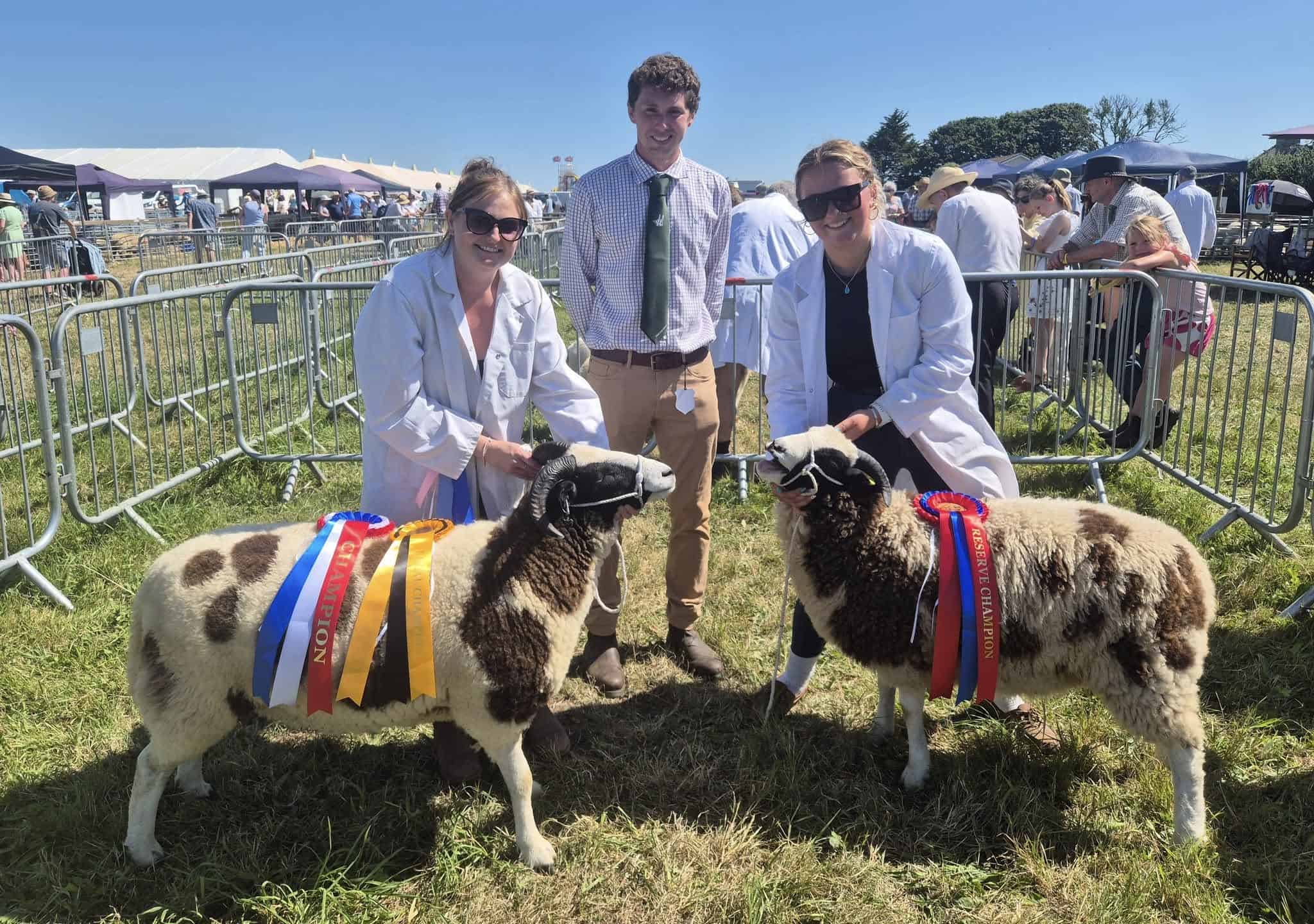
At Lampeter Show Wyn and Siwan Harries’ shearling ewe was female champion out of 17 breeds and reserve interbreed champion

C:\Users\Clive\Downloads\Samantha Matthews at RWAS Spring Show.jpeg

Samantha Matthews with her ram at the Royal Welsh Spring Festival

I am aware that not everyone uses social media, for show dates and upcoming events, please check the JSS website under shows, also the Wales region tag for news and events.

The Wales Show and Sale will be in Raglan on Saturday 20th September, many thanks to Lyndon Trumper.

We will be holding our Christmas meal at the White Hart, Llandeilo, on Saturday 29th November at 12.30 with our Wales AGM beforehand. The White Hart has 12 rooms available for anyone wishing to stay.

C:\Users\Clive\Downloads\Welsh Smallholders Show.jpg

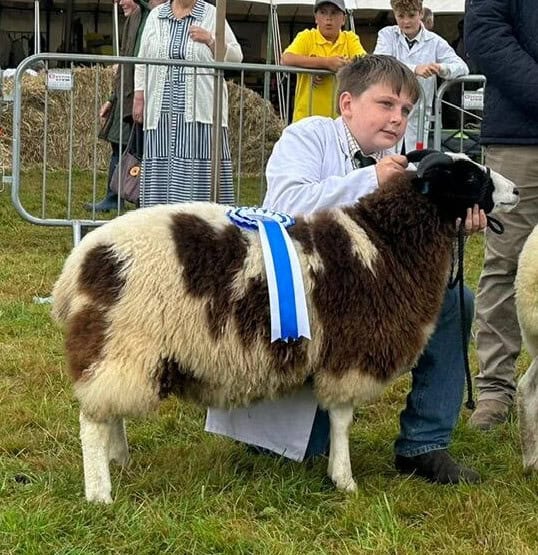
At the Royal Welsh Smallholders Show, James Leonard’s shearling ram was champion and Gwenllian Evans’ shearling ewe reserve. Siwan Harries judged.
South West Autumn 2025

SOUTH WEST REGION

Regional Contact Member – Richard Fenwick

We have had a busy start to the show season stretching across Cornwall, Devon, Somerset and Dorset. The lack of rain in some parts of the region has created significant challenges. Some members are running short of grazing and the hay yield has been less than half from previous years in some areas. We look forward to the full show calendar that the rest of the year brings.

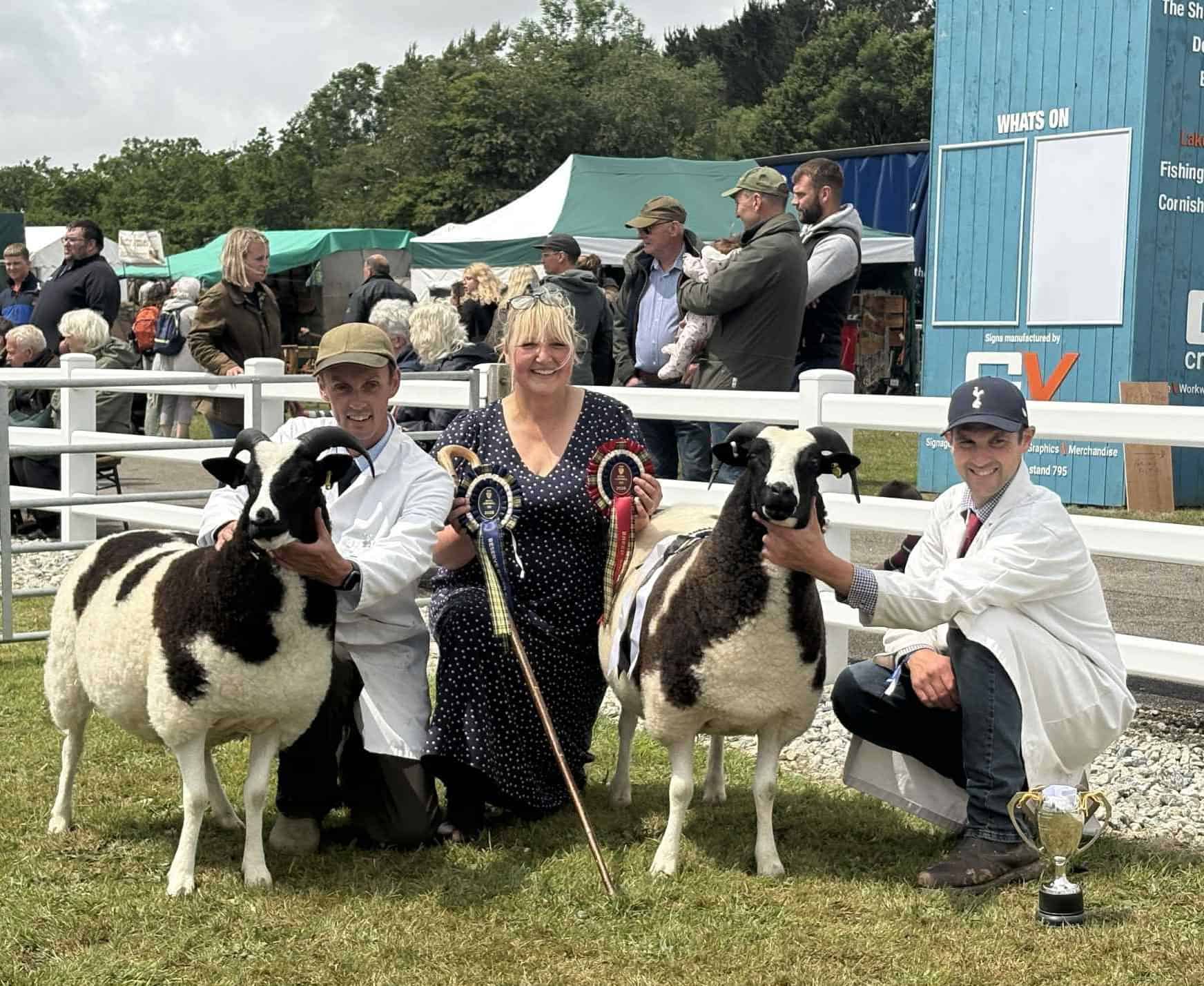
At the Royal Cornwall Show, Chris Fisher’s ewe was champion and Chris Slee’s shearling ewe reserve. The judge was Kay Carpenter.

Young member, Riley Marsh, is this issue of the Journal’s South West “Meet the Member.” He started his Marsh flock in 2019 when he was given two Jacob lambs for his birthday. He currently has 10 ewes, mainly two-horners, and breeds his own replacements. His first ram was Dalewode Warrior, followed by Dunmor Adam Ant and Hope Alladin, and he currently is using Celtic Ozzy. Riley says what he likes most about keeping Jacob sheep is that they have their own personalities, are good mothers, and they make good crossing ewes too. He likes Jacobs with wide shoulders and frames, wide dark horns and a good white blaze with a “look at me” presence. Riley says his greatest achievement was winning the 4 – 7 years Young Handler class at the Bath & West Show in 2019 with a home-bred ewe lamb.


Riley showing one of his lambs

At Devon County Show under judge, Gareth Jones, Chris Fisher’s ewe and ram were champion and reserve

At Liskeard Show Steph Jasper’s ewe was champion, and Bethany |Osborne’s ewe lamb was reserve. Josh Quant judged.

Central Autumn 2025

CENTRAL REGION

Regional Contact Member – James Cartwright

Firstly, I would like to thank Kay Carpenter and the Central region committee for their hard work in the past few years, continuing the success of the Central region and for helping members to benefit from years of experience in the art of keeping sheep. I step into my tenure as RCM with a deep sense of honour and a small feeling of disbelief, having only kept sheep for a relatively short time of 12 years. My family and I have enjoyed the alert nature of the Jacob and the support from the Society membership along the way. I really believe this breed has it all, from simple lawnmowers on a smallholding, through high quality meat production, extensive opportunities through woollen products, to the in depth and sometimes bewildering opportunity of breeding high quality showing/breeding stock.

Open Day

In May we had the opportunity to visit the Hayepark Flock in Shopshire by the kind invitation of Michelle Chivers and her family. Michelle took great delight in describing the journey that she has been on, as her family takes some early but very successful steps into building a strong pedigree Jacob flock. It was wonderful to see the whole family engaged and passionate about learning the ins and outs of the breed and not to be afraid of just having a go which, I am sure we have all felt before striding into the show ring with the best stock that we have managed to produce in any given year.

The day continued with a trimming demonstration by the eminent Richard Chapman where he showed us the art of preparing a shearling for the show ring to show the individual off to their best. Even better than that, Michelle allowed some of us to “have a go” and to hone our trimming skills and to put into practice the skills that we had just learnt. Michelle’s vet then gave a very in-depth presentation and question and answer session to the group which was absolutely top class. It never ceases to amaze me that there is so much to learn but isn’t that some of the appeal. A hog roast lunch was enjoyed by all, cooked by Michelle’s family, followed by the obligatory set of delicious cakes and puddings. A successful raffle added to the days proceeds, enabling us to return £525 to the Society after the days costs had been allowed for. For the few of us that still had some energy left, we were then treated to a walk amongst the bluebells in Mortimers Forest and fabulous long reaching views to the neighbouring counties.

Showing time

May saw the start of the showing season with the first of the region’s county shows, first off was Shropshire and shortly followed by Staffordshire. In Shropshire, judge, Owain Jenkins, chose for his breed champion, a strong lamb from Salopearl Jacobs and his reserve champion went to another stunning shearling ewe from Millvale Jacobs. Staffordshire saw judge, John Dixon, decide this time on his champion from Millvale Jacobs and reserve champion went to Salopearl Jacobs. A new set of perpetual awards in the region for “best novice” at Staffordshire County show, Hanbury show and the Royal Cheshire show were awarded to the best novice in these respective shows with experience in showing of under three years. Staffordshire’s award went to Grace Leslie of Mole End Jacobs, but looking at the number of rosettes that Grace had managed to accumulate during the show, I think the term novice may not be fitting for her skills and the quality of the sheep that she had turned out. At the Royal Cheshire show, Gillian Lewis with her sheep from the Hillvalley flock took the perpetual award for best novice in this prestigious show. Finally, at the Hanbury show, Michelle Chivers took the well deserved win of the perpetual trophy for best novice with her sheep from the Hayepark flock, presented by Hayley Higginson, who we have to thank for these magnificent awards to recognise new entrants achievements in the show ring.

Tom Lewis’ ewe lamb was champion at Shropshire County Show with Bob and Paula Bramley’s shearling reserve. Owain Jenkins judged.
One of the main events in the showing calendar within the Central region was undoubtedly the Royal Three Counties Show where the huge classes of Jacob sheep gracing the show ring and viewed from the adjacent Jacob breed stand really were a spectacle to behold. Congratulations to all the members showing this year, you all deserve a ribbon in my eyes for doing such a sterling job of showing off our breed to the highest degree. Paula and Bob Bramley from Millvale Jacobs continued with their championship success in Malvern, taking breed champion, which is becoming a bit of a theme for 2025 and utterly deserved.

Bob and Paula Bramley’s Royal Cheshire County Show champion ewe

Not to be outdone outside of the show ring and thanks to Kay and Sean Carpenter, Jean Simmons, Charlotte and Gill Heaven, Michelle Chivers and others, our Jacob sheep breed stand was placed first by the show, with the rosette being gratefully accepted by myself and Lesley Pope (although we both could take very little credit for this achievement), well done team.

Richard Chapman with his second prize ewe at Staffordshire County Show

Date for the diary

This year’s Central region flock competition will be held on the 26/27/28 of September with judges, Gareth and Simon Jones, travelling the region inspecting and scoring the flocks for the converted array of trophies that are up for grabs. Further details will be posted shortly, and I would encourage as many of the membership as possible to “have a go”, there really is very little to lose and the opportunity to have conversations with two very experienced judges, on farm, is an opportunity not to be missed.

Welcome to new members

I would also like to welcome the new members to the Central region, and I hope to meet you soon: Ruth Beaton – Matlock, Simon and Charlotte Chell – Stafford, Gemma Glossop – Ashover, and Nicolas and Abigail Sole – Gloucestershire.

Jobs for the month ahead

Our own Goldstone flock have bounced back well after weaning, despite the dry weather conditions and the challenge in keeping enough grass ahead of the ewes to recover. They have done us proud, again. So, the thoughts of tupping 2025 start to come to mind and this year, for the first time, we are going to try CIDRs to synchronise and hopefully bring lambing forward a little, so that we don’t have the smallest lambs in the ring come show time 2026.

James Cartwright’s group of three at Staffordshire County Show

Gillian Lewis who won the best novice award presented by Hayley Higginson at the Royal Cheshire County Show

Ireland Autumn 2025

IRELAND REGION REPORT

Regional Contact member – Matthew Kehoe

Balmoral Show kicked off our 2025 show season in Northern Ireland expertly judged by Margie Rushbrooke who tapped forward an impressive shearling ewe, Tullymore Glenda, from J & J Maybin as champion Jacob, with a powerful shearling ram, Termeil Broxi, from David Poston in reserve. These two animals continued their winning streak at both the Ballymena and Lurgan shows in the following weeks under the watchful eye of Derek Brown and Pat Gogan respectively. At Armagh show Matthew Kehoe saw Tullymore Glenda retain the champion title and went on to place an elegant two year old ewe, Kingarrow Layla, from the Colhoun family in reserve. Saintfield show judged by Tom Green saw Tullymore Glenda take home the champion rosette for the Maybin family again. A very smart shearling ram, Hillhead Buster, bred by the Patterson family, took the reserve placing for the Colhoun family’s Kingarrow flock.

The Colhoun family’s shearling ram, male champion at the Northern Ireland National Show at Omagh

The Northern Ireland National held at Omagh was a brilliant gathering of pedigree animals with over a hundred entries from all over Northern Ireland. Jacob Sheep Society Field Officer, Scott Dalrymple, kindly travelled from Scotland to judge the show and awarded the female champion and overall champion Jacob to the Jamieson family’s homebred shearling ewe, Whitecleugh Bonnie. The reserve female and second reserve champion was the second-place shearling ewe, Tullymore Glenda, from J & J Maybin. Male champion and reserve champion Jacob was awarded to Hillhead Buster exhibited by the Colhoun family with the first-place ram lamb, an Eglish bred four horn animal from the Harkin family, taking reserve champion male.

Athlone show was the first outing for many breeders in the south of Ireland where Ady Hamilton tapped forward Matthew Kehoe’s Macamore shearling ewe as champion with the Gogan family’s powerful aged ewe in reserve. The following week at Gorey show judged by Joseph Hughes we saw the Macamore shearling retain the champion title with a smart Gorabeth ram lamb

in reserve. At the Southern Ireland National at Clonmel show we saw a great turnout of over 50 sheep for Paul Colhoun to judge. Female champion and overall champion Jacob was awarded to Macamore Black Beauty, an aged ewe from Matthew Kehoe. Reserve female and the reserve champion was a smart Ballygullen ewe lamb from Kerrie O’Sullivan. Male champion and 2nd reserve champion was a stylish Gorabeth ram lamb from the Fanning family. Reserve champion male was awarded to Harkness Charmander exhibited by Joseph Hughes.

Matthew Kehoe’s ewe was champion at Clonmel under judge, Paul Colhoun. The reserve was ewe lamb from Kerrie O’Sullivan

At the NSA Sheep NI event held in Dungiven we had a fantastic day on the new stand esigned and built by David Poston. Our thanks to Emma Poston for the fantastic flowers and to the Maybin family for sponsoring the bales, fake grass, banners and all the little essentials needed to furnish the stand. Sheep were provided by David Poston, Dabhan Harkin and the Patterson family. The competitions run on the day by the team manning the stand attracted a lot of interest from young and old sheep breeders alike. My thanks to everyone involved on the day and in the lead up to the event – you did a superb job and did our breed society justice. Well done all.

The Jacob Sheep Society stand at the Northern Ireland NSA event

I’ve heard nothing but good reports about the Maybin family’s open day held at the Tullymore flock near Ballymena. A brilliant spread of food, sheep and prizes left everyone in good spirits thanks to the generosity of the Maybin family. James and John raffled one of their homebred ewe lambs to cover their costs with the surplus being used to buy the region some much needed equipment and breed promotion material over the coming weeks. Huge congratulations to Isaac Cooke who won the much sought after ewe lamb which will make a good addition to his growing flock of pedigree Jacobs.

Writing from my desk here in the farm office I sit thinking of some of the fantastic stock that I’ve had the opportunity to view and handle over the last few weeks all over Ireland and the United Kingdom from the Royal Highland at Edinburgh, to the Northern Irish National at Omagh, the Southern Irish National at Clonmel and most recently my trip to the Great Yorkshire. I’ve had a fantastic few weeks meeting with friends, having a laugh and engaging in plenty of stock talk with breeders on both sides of the water. On all of my travels as either a spectator or as an exhibitor I’m greatly encouraged by two things that seem constant across the regions I’ve visited, the young people coming through that are breeding and showing Jacob sheep, helping at shows and volunteering at events as well as the brilliant camaraderie amongst Jacob sheep breeders that is second to none. I think our breed is in safe hands for many years to come if we continue to preserve these attributes at our core as a breed society – it’s certainly something that is in abundance in the Ireland region.

The Harkin family’s reserve male champion at Omagh, a four horned ram lamb

American Jacobs

The Jacob Sheep: Celebrating the UK and USA Breeds

They look like something painted in a dream, multi-horned, piebald, half-wild and yet the Jacob sheep has been calmly grazing in British fields for centuries and standing sentinel in American pastures since the early 20th century. It is a breed that holds together opposites: primitive and modern, ornamental and practical, sacred and commercial.

In both the UK and the USA, the Jacob sheep has inspired fiercely loyal communities. But the two countries have chosen diverging paths: the UK, aiming for utility and refinement without losing the breed’s essence; the USA, preserving a living relic of ancient genetics and form. These aren’t contradictions-they’re complementary philosophies, both rooted in love for the same remarkable animal.

This article walks between these worlds, mapping where the paths split and where they still run side by side.

Origins and Divergence: The Breed’s Transatlantic Journey

Jacob sheep have long drawn attention for their unusual appearance: a piebald fleece, black, brown or lilac patches on white, and two or four horns (sometimes more). Their appeal is more than skin-deep—they are alert, hardy, and intelligent, with a calm temperament and versatility in both meat and fibre production.

Though they descend from the same stock, UK and US Jacob sheep populations have diverged. In the UK, the emphasis has shifted toward conformation and utility, while in the US, breeders have prioritized retaining a broad phenotype reflective of early imports, with greater variation in size, horn type, and wool quality.

At a Glance: Breed Standard Differences

Feature UK (Jacob Sheep Society)   USA (Jacob Sheep Breeders Association)
General Type Upstanding, deep-bodied, sturdy commercial animal Fine-boned, primitive, smaller stature
Head Clear white blaze, black cheeks, black ears preferred; wool-free forward of horns; dark nose preferred Slender, triangular head; large symmetrical eye patches; clear white blaze; dark-pigmented nose in adults
Horns Always horned (2 or 4); black preferred; 4-horned: top pair upright, spaced; 2-horned: spaced from cheeks 2, 4, or more horns (occasionally 6); must be well-differentiated and balanced; black or striped horns; polled sheep disqualified
Fleece/

Markings

White with well-defined black patches; clear, symmetrical markings preferred White with black or lilac patches; “badger-faced” (black cheeks, muzzle, white blaze); 15–85% coloured; random spots
Legs White legs preferred; black hooves White or with coloured patches; black or striped hooves; all dark legs not preferred
Body Size Rams: 70-90 kg (154–198 lb); Ewes: 55-70 kg (132–155 lb) Rams: 54–82 kg (120–180 lb); Ewes: 36–54 kg (80–120 lb), but generally finer-boned and smaller in appearance
Disqualifications Polled sheep, excessive white or black, poor horn structure Polled sheep, all black legs, absence of facial markings, poor horn structure

Some examples of American Jacobs

Pictures with kind permission of the ‘Jacob Sheep Breeders Association’ – USA

Judging and Presentation in the Show Ring

UK Shows:
UK show standards emphasize commercial conformation, symmetrical markings, and adherence to the Jacob Sheep Society’s breed guidelines. Judges prefer sheep that are robust and dual-purpose-offering both wool and meat-while maintaining traditional features. The focus is on flock improvement and the breed’s viability within modern agriculture.

USA Shows:
US shows lean toward preservation of primitive traits. Judges favour sheep with balanced, natural horn growth, distinctive spotting, and minimal grooming or alteration. The goal is to maintain the breed’s ancient appearance and genetic integrity rather than to optimize for commercial traits.

Breeding Philosophies and Priorities

UK Breeders:
Jacob sheep in the UK are bred to enhance body size, commercial value, and conformation. Breeders focus on improving fleece quality and carcass traits, while maintaining the breed’s signature multi-horned appearance and distinctive markings. This practical approach ensures the Jacob sheep’s continued relevance on modern farms, with an emphasis on meat yield and fleece uniformity. Rams and ewes are specifically chosen for their larger frames and well-marked fleece.

USA Breeders:
USA breeders emphasize maintaining the Jacob as a heritage breed. The term “primitive” is used in the classification sense, but this does not imply the sheep are unimproved or impractical. American Jacobs serve niche markets for wool, meat, pelts, skulls, and horn crafts. Breeders work to maintain heritage traits close to the original imports, while selecting for finer fleeces within a broad JSBA standard. Individual breeders may focus on two-horn or four-horn lines, black or lilac colorations, or specific wool characteristics—resulting in a diverse yet carefully maintained population.

Societies and Global Community

United Kingdom:
Founded in 1969, the Jacob Sheep Society (JSS) maintains a closed flock book, defines breed standards, and runs national and regional shows and sales. The Society supports ongoing improvement, education, and promotion of Jacob sheep within the UK and internationally.
Website: https://www.jacobsheepsociety.co.uk

United States:
The Jacob Sheep Breeders Association (JSBA) and the American Jacob Sheep Registry support breeders and uphold standards across the USA. The JSBA maintains an open flock book, allowing animals of unregistered parentage to be inspected and, if they meet breed standards, enter the registry. This approach broadens genetic diversity and accommodates varied breeder goals, from horn configuration to wool finesse.

The Jacob Sheep Breeders Association (JSBA) was formed in 1985 and oversees registrations, breed standards, and outreach for Jacob breeders across the US. It promotes the conservation of the original Jacob phenotype.
Website: https://www.jsba.org

Other Countries:
Jacob sheep are found in Canada, Israel, Australia, and other countries, often following either UK or US breed standards. While national societies remain independent, many share knowledge and support global preservation efforts.

Celebrating Differences, Honouring Tradition

A Shared Passion for Jacob Sheep

Despite geographical differences and distinct breeding focuses, Jacob sheep communities in the UK and USA share a profound respect for this ancient breed. Whether Jacobs are bred for meat, wool, or cherished as a living connection to pastoral history, they consistently inspire passion and pride in their keepers.

Preserving Heritage, Ensuring Future

Both the UK and USA Jacob sheep communities are dedicated to preserving and promoting this extraordinary breed. While their approaches vary—the UK emphasizes commercial refinement, while the USA focuses on primitive conservation—they are united by a common goal: ensuring the Jacob sheep flourishes now and in the future.

Recognising the value of structured improvement alongside the importance of maintaining heritage traits allows for diversity without compromising the breed’s identity. The Jacob sheep, with its distinctive spotted fleece and multi-horned head, remains unique not only in appearance but also in the remarkable stories woven through its evolution on both sides of the Atlantic. Appreciating these differences strengthens the international Jacob sheep community, offering a more complete picture of the breed’s rich identity. It’s one breed, with two expressions, both truly worth celebrating.

word image 12747 1

Lambing Off-Script: Out-of-Season Breeding with CIDRs and Sponges

by Terry Barker

Jacob sheep are a breed close to my heart, and like many traditional breeds, they march to the beat of a seasonal drum. Ewes naturally cycle as the days shorten, which means most of us see lambs in the spring. It’s a rhythm that works, but sometimes, you need a different tune. Maybe you want lambs on the ground earlier for a specific market or show, or perhaps you want to split your lambing period to ease the workload. This is where out-of-season breeding comes in, using tools like CIDRs and sponges to gently nudge your ewes’ reproductive cycles.

What are CIDRs and Sponges?

Think of these devices as temporary hormonal assistants. Both are small, prescription-only devices that you insert into the ewe’s vagina. They work by slowly releasing progesterone, a hormone that essentially convinces the ewe’s body that it’s pregnant, preventing ovulation.

  • CIDRs (Controlled Internal Drug Release devices) are typically Y-shaped plastic devices. They’re easy to insert and tend to be less messy.
  • Sponges are soft, tampon-like foam blocks soaked in progestogen, a synthetic version of progesterone.

After being in place for about 12 to 14 days, the device is removed. The sudden drop in progesterone tells the ewe’s body to prepare for ovulation. Within a tight window of 24 to 48 hours, she should come into season. If you have a ram on standby, mating usually follows. For a more predictable and powerful response, especially out of season, many keepers use a teaser ram or a hormone injection like PMSG at the time of removal.

Why Go Off-Season?

There are several reasons why I—and other keepers—might consider this approach:

  • Catching the Early Market: Lambs born earlier may be ready for spring shows or early markets when prices are at their highest.
  • Balancing the Books (and Your Back): Splitting your lambing period can help you manage your workload, spreading the sleepless nights and intensive care over a longer period, in controlled batches.
  • Managing Your Flock: It’s a great way to synchronise large groups for more efficient AI or to advance the breeding of a young shearling without waiting a whole year.
  • Making the Most of Your Space: If you’ve got limited indoor shelter, lambing earlier can help you avoid the muddy chaos of a wet spring.

A Step-by-Step Guide to Synchronising Ewes

This isn’t a strategy you can rush into. It requires careful planning and attention to detail.

1. Choose Your Ewes Wisely: Start with healthy ewes in good condition (a body score of 3.0 to 3.5 is ideal). They should be proven breeders, disease-free, and already cycling naturally.

2. Insert the Device: Always wear gloves and use a lubricated applicator to keep things clean. Hygiene is non-negotiable here.

3. Set a Timer for 12–14 Days: This is the sweet spot. Leaving the device in for too long increases the risk of infection.

4. Remove the Device: I like to mark the date and time on a calendar or in my phone’s notes. Consistency is key.

5. Consider PMSG/eCG: Administering this hormone injection at the time of removal gives you a much stronger and more predictable ovulation response, especially out of season.

6. Introduce the Rams: Some people bring in a teaser ram at the time of removal, and then the fertile ram 24 to 48 hours later. I choose to put my ram in straight away.

7. Watch and Wait: The ewes should cycle within a very tight window, and lambing will follow a similarly synchronised pattern about five months later.

Other Ways to Lamb Out of Season

While CIDRs and sponges are a highly effective method, they’re not the only option. Some shepherds prefer more natural approaches or a combination of strategies to encourage out-of-season breeding.

  • The “Ram Effect”: This is a powerful, natural form of synchronisation. Ewes that have been kept entirely separate from rams for at least a month will often come into season shortly after a ram is introduced. The sight, sound, and smell of the ram triggers a hormonal response in the ewe. Using a teaser ram first can be a great way to “jump-start” the process and save your fertile ram’s energy for when the ewes are ready.
  • Flushing: Improving the ewes’ nutrition just before breeding can dramatically boost reproductive performance. By increasing their energy intake, you put them into a positive energy balance, which can lead to higher ovulation rates, even during off-season periods.
  • Breed Selection: While Jacob sheep are seasonal, some breeds, or specific lines within a breed, are naturally less seasonal than others. Focusing on genetics for reduced seasonality can, over time, help you build a flock that is more willing to lamb out of the normal spring window.

The Fine Print: Pros and Cons

Like any intervention, there are trade-offs to consider.

Pros:

  • A very tight lambing period, often just 5–7 days.
  • Perfect for AI and embryo transfer programs.
  • Gives you ultimate control over your breeding dates.
  • It’s a reliable way to bring ewes into season in the spring or summer.

Cons:

  • The cost: CIDRs, PMSG, applicators, and vet bills all add up.
  • A risk of infection if hygiene isn’t perfect.
  • Not a fool proof solution—some ewes, especially if they’re too far out of their natural cycle, just won’t respond.
  • It requires precision and planning.
  • The use of hormones may affect organic certification.

A Final Thought on Responsibility

It’s crucial to remember that in the UK, CIDRs and sponges are prescription-only medicines. You need to get them from a vet and follow their instructions to the letter. This isn’t a quick fix; it’s a responsible, carefully considered tool.

For me, the goal isn’t to force my flock to do something unnatural. It’s about having the flexibility to manage my farm in a way that works for me and my schedule. Synchronising ewes for out-of-season lambing isn’t for everyone, but done with care and forethought, it can be a game-changer for your flock management.

What are your thoughts on out-of-season lambing? Have you tried it, or are you a firm believer in letting nature take its course?

A group of sheep grazing in a field AI-generated content may be incorrect.

The Rorschach Fleece: Interpreting the Jacob Sheep

By Terry Barker

A goat with horns standing in a field of grass AI-generated content may be incorrect.

A freshly shorn Jacob fleece is a Rorschach test. You see a badger. I see a map of Wales. Someone else sees the face of their ex.

Our brains are hardwired to find patterns, and Jacob sheep are covered in them. No two markings are the same, yet some families pass down visual quirks as faithfully as a surname: a lightning-bolt blaze, a skullcap patch, a bandit mask. These unique cues shape how we relate to—and judge—our flock.

A black ink blot on a white background

Livestock showing is essentially a beauty contest, focused on symmetry, cleanliness, and bone structure.

But in the Jacob world, beauty is chaos. You’re not breeding for a pure white fleece or a uniform look; you’re juggling horns, fleece quality, and the endless surprise of marking variation.

This drives some judges mad. It delights others. There is no perfect Jacob. There are only contenders.

And in the human mind, something strange happens: we start to assign meaning. That ewe with the eye patch? She’s cheeky. The ram with the brown neck and four symmetrical horns? Aristocratic. The lamb with the full white face and dark body? A poet. Possibly troubled.

This is pareidolia: the same mental trick that lets us see faces in clouds or Jesus in toast. In flock keeping, however, it goes deeper. We remember sheep by markings, assign personality by silhouette, and—quietly—fall in love with patterns that remind us of untold stories.

Breeders often talk about ‘a look I like’. They’ll walk away from a technically perfect animal because something ‘feels off’, or they’ll chase a bloodline for five years because the granddam had ‘that look’. This is psychology, not science.

Which raises a heretical thought: what if some of our best Jacob sheep are products of superstition, aesthetic bias, and pure gut instinct? What if that’s precisely what makes them good?

A group of sheep grazing in a field AI-generated content may be incorrect.

We should, of course, record fleece micron count and horn structure. But we should also admit: part of the magic is that we don’t quite understand why we prefer one over another. And in that mystery lies the real joy.

You don’t just keep Jacob sheep; you interpret them.

A dog in a trough AI-generated content may be incorrect.

You cannot shepherd without a good dog…………

By Janet East

This comment was made by the best shepherd that I have had the privilege to meet, although our first meeting was one which I still look back on with horror. The worst ever farming nightmare I’ve ever had, was when I woke up to a scene which words cannot really describe.

On checking my flock one morning, I was faced with devastation. My heart sank at the sight: several ewes and lambs lost, others distressed and injured – the aftermath of a fierce and vicious dog attack. I couldn’t speak, couldn’t think straight and just wept. That was weak on my part and didn’t achieve anything, so, pulling myself together, I went indoors and called the necessary people to help clear the terrible scene I faced

Within hours I heard a knock at the back door and what faced me also looked horrific! A middle-aged male, certainly grumpy, with bushy eyebrows like you’ve never seen. He stank of sheep and his sheepdog, which smelled even worse, stood looking silently evil and carried a necklace of clinkers around his collar more commonly known as sheep daggings! His name was Mush - that’s the dog. The male object was none other than the infamous local shepherd called Richard, whose name and reputation came before him.

The conversation that ensued was quiet, informative, honest, but serious. Those couple of hours changed my life regarding shepherding and Richard became not only my mentor, but a wealth of valuable information about sheep, but how to manage them and make life as easy as possible. – the art of good shepherding. The trouble was we’re both strong characters, full of our own opinions and slightly stubborn - a good recipe for regular differences of opinion. My first lesson came quickly!

“Janet, you cannot shepherd effectively without a dog.”

Yes, I can, I do well now without a dog.”

“Yes, you shake the bucket, and they run towards you, that’s because they love the expensive, unnecessary food you are giving them. One day they will turn a blind eye and then you’re in trouble. I’m telling you woman, you need a dog”

The options were a trained dog - couldn’t afford it, and what was the fun in that, or … a pup, which, of course, would be of no real benefit for at least 12 months or more. It had to be the latter option, and I’d have to keep shaking the bucket for a while longer.

Scanning the local papers, I soon came up trumps and I set off to see a litter of border collies. I thought all puppies were gorgeous, but not this litter – they were a mixed bag of ugly, timid, wormy looking pups. Poor things. I took pity and said I am sure I could sort it. Richard told me not to be so blinking stupid and told the owner, in no uncertain terms, that we were not purchasing!

The next litter - gorgeous, playful, beautiful coats and, yes, you could take the lot home. I’ve been brought up in a male world at home and at work and they are uncomplicated (well most are) and so a dog it had to be. I called him Jack - a strong tri-coloured, handsome dog.

The next 12 to 18 months were great. I was learning - Jack was a great pupil and Richard a miserable, demanding, good teacher. Bucket shaking was diminishing, but not redundant.

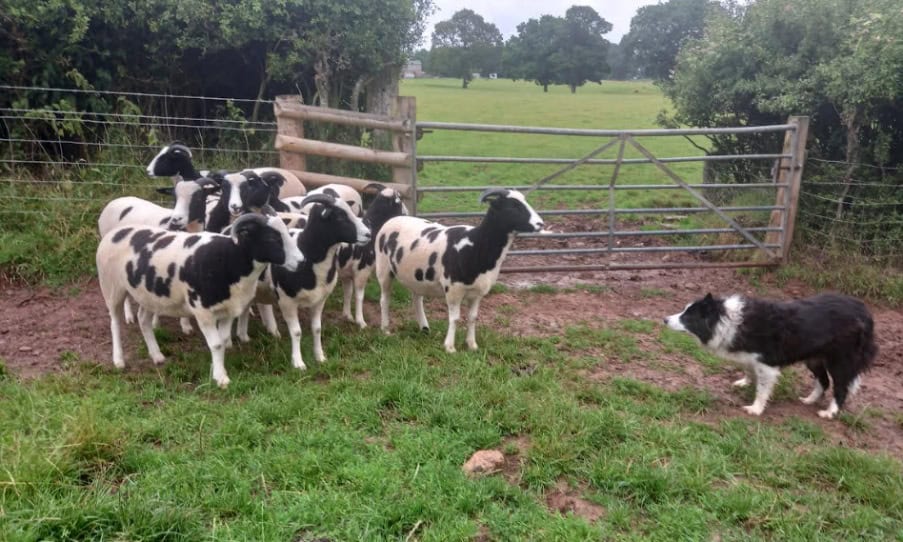
A group of sheep in a fenced in area AI-generated content may be incorrect.

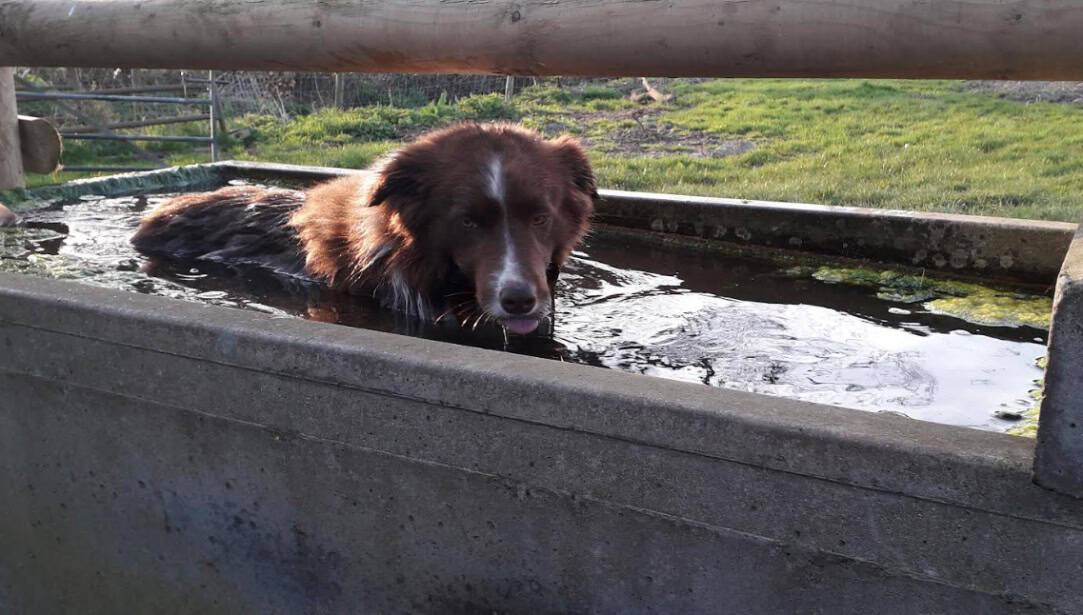
After a very long hot morning moving sheep, worming and general maintenance, Jack was tired, long tongue hanging out and panting and soaking wet from a quick dive in the sheep trough. Richard declared “You need another dog.”

I quickly retorted “No I don’t, Jack is brilliant and so young.”

“He might be all those things, but one day some idiot driving too fast down the lane will run the dog over, or worse still, you might, by accident, ………………. I know - I’ve done it.”

Kipper, number two dog, was big, bold, better bred, had style and class and, I suppose, I had improved as well. Jack and Kipper worked well together.

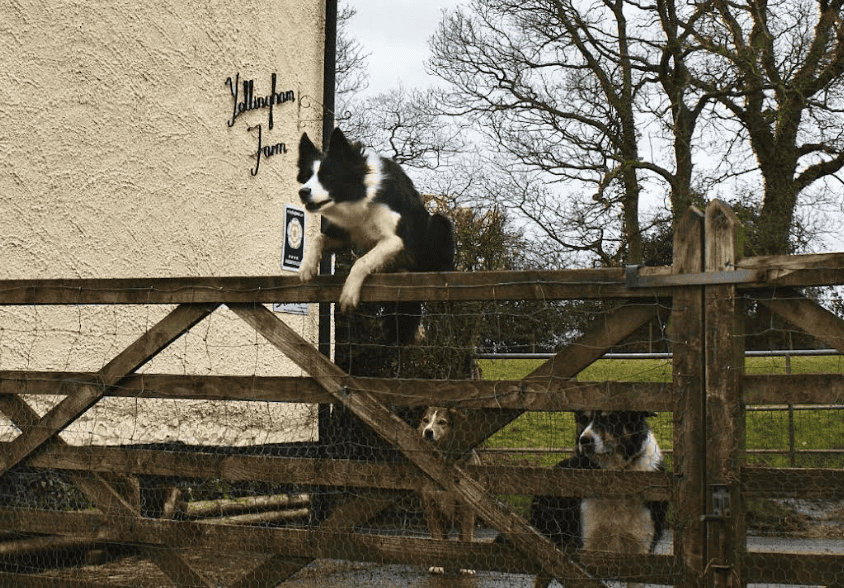
A group of dogs on a fence AI-generated content may be incorrect.

Kipper was running so well that Richard persuaded me, against all odds, to enter a sheepdog nursery trial. I was convinced that I was not good enough, would make a fool of myself and the dog. We practised at home in earnest and the day soon arrived. Even on the journey there in Richard’s disgusting, minging, sheep-smelling truck (complete with the equally disgusting, sheep-smelling Mush!), I was trying my hardest to pull out. No chance.

My turn came, up to the post we went, shaking, worrying, what was I doing. I sent Kipper “away to me” (out to the right). He gathered the six sheep, brought them steadily to me in a relatively straight line, round the back of me and they set off on the first short drive, aiming for the two fetch gates and the gap - a difficult thing for a dog, as they naturally want to bring sheep to you, not drive them away from you. So far so good. Through the gates - “come by Kip” …. no response, “come by Kip” ……. no response. S**t. The dog had gone totally deaf, and he drove the sheep steadily on and on, not listening to me at all and ended up driving them into the little stream bordering the trials field.

Total embarrassment as over the Tannoy the judge said “I think you need to retire Mrs East”. Given sheep hate water, Kipper was clearly impressed - at home he struggles like mad to push them through water-logged gateways. When I eventually got to him and the sheep, he bounded up to me, tail wagging furiously, so pleased with his efforts. He thought he’d won the day. I had to smile.

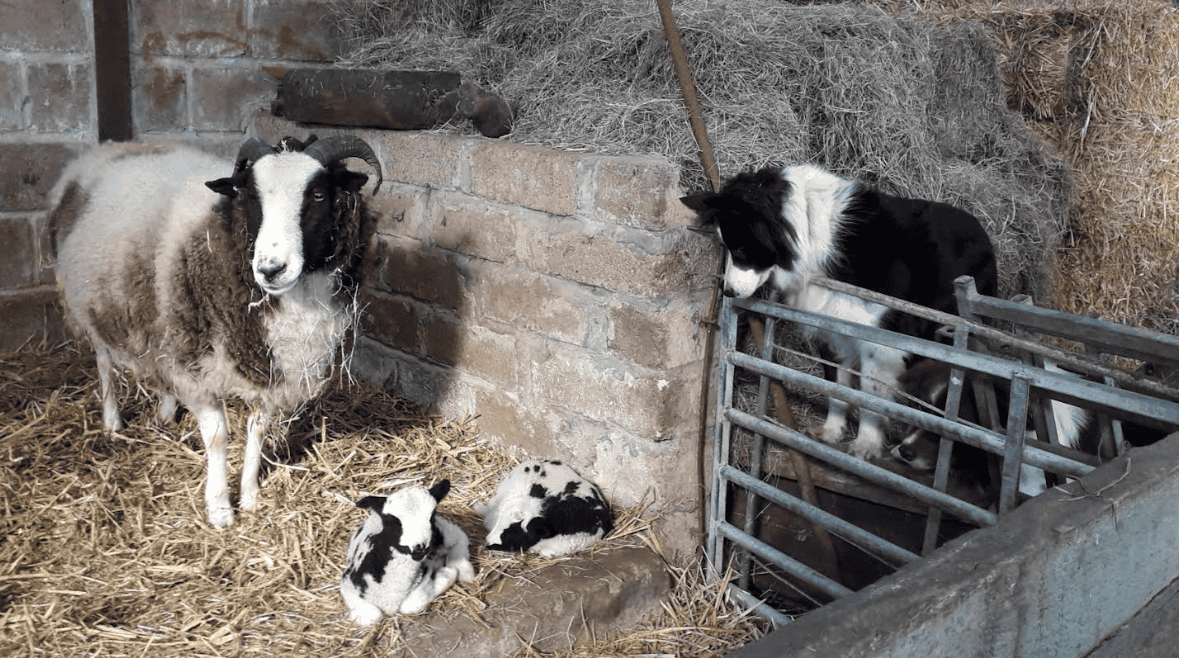
A dog in a trough AI-generated content may be incorrect.

I was embarrassed, but, perhaps, not quite as much as the gentleman who ran after me. He sent his dog “away to me”, running beautifully, past the sheep, on and on - but the dog was soon totally out of sight amid gallant efforts at concise whistle commands which soon degraded into abusive verbal commands by his owner to stop his progress. The dog was found some distance down the road at the local pub!

My trialling career started and ended on the same day..!

A group of goats in a pen AI-generated content may be incorrect.

Jacob wool jumper

Wool Beyond the Grave: Jacob Sheep, Burial Textiles, and the Ghosts in Your Jumper

Introduction: In 2022, archaeologists near Carlisle uncovered something quietly remarkable—a body curled within a peat bog, time-paused and waxen, as if the earth had been holding its breath. The man wore a rough tunic, undyed and simple, woven from a mottled, two-tone wool: dark against light. The pattern rang familiar.

Jacob wool.

But he had died more than 1,800 years ago.

Before you grab a pitchfork and declare your neighbour’s flock ancient royalty, let’s take a breath. No one’s claiming he kept registered pedigree sheep. And yet, in the folds of that ancient garment lies a whisper of something stranger—that piebald fleece, once shunned or overlooked, might have once carried greater meaning. Perhaps even reverence.

A brown and white sweater on a mannequin

The Coat of Contradictions

Jacob wool doesn’t conform—and that’s its genius. It’s coarse and soft. Structured and unruly. Black and white, but never grey. It asks not for haste but for handling, with patience and curiosity. You can dye it, but most don’t bother. Its natural colours speak in smoke and cream, snow and shadow.

When you wear Jacob wool, you wear contradiction—and harmony.

Modern fashion, with its glossy uniformity, still doesn’t know quite what to make of it. Jacob fleece resists standardisation. Each one differs. Some are crimped and cloudlike. Others, wiry and windproof. Machines falter. Hands rejoice.

This is wool that reads like a biography.

When Sheep Were Sacred

In Iron Age Britain, animals that stood out didn’t simply feed or clothe—they signified. Unusual coats and twisted horns marked sheep as something more than stock. They were tethered outside granaries, buried with the honoured dead, or watched like omens grazing along the fence line.

To dismiss such beliefs now is easy—but perhaps we shouldn’t. There’s a quiet poetry in the idea: the Jacob as a living emblem of balance. Black and white. Earthy and ethereal.

And over time, that symbolism may have worked itself into the very fibre of the wool.

Wool as a Memory-Keeper

Here’s an overlooked truth: sheep carry culture.

In their fleece lie histories. Landscapes. Economies. Jacob wool tells a story of cold winters, stolen commons, ritual oddities, and the eccentricities of 18th-century landowners with a taste for the exotic.

To spin it is to join that lineage. You become part maker, part archivist—crafting something useful, beautiful, and a little rebellious.

It’s the kind of wool you might be buried in—if only to baffle the archaeologists of the future.

So Why Aren’t We All Wearing It?

Short answer: it doesn’t tick boxes.

Jacob sheep resist scaling up. No two fleeces are exactly alike. Commercial buyers, craving predictability, frown at that. They want ivory, not ink. But Jacob fleece asks for something else: care. Attention. Choice.

And for those who spin, weave, or wear it—that’s the point.

It won’t match. It won’t comply. And that’s what makes it matter.

A person in a brown Jacob wool coat

A Case for Wool With Character

At the Jacob Sheep Society, we steward more than just genetics. We preserve texture. Colour. Story. We carry forward a tradition that says sheep are more than scenery—and wool, more than filler.

If you’ve never handled a Jacob fleece, start there. Touch it. Smell it. Pick out the bits of bramble by hand. Learn its moods. Spin it thick. Spin it whisper-fine. Don’t chase flawlessness. Chase character.

Then make something bold. Something offbeat. Wear it to the shops. Wear it to a wake. Wear it where no one else would.

Because Jacob wool doesn’t whisper.

It remembers.

Conclusion: Curious about Jacob sheep? Want to try your hand at fleece, yarn, or just a good story? Join the Jacob Sheep Society—and connect with a breed that carries the past on its back.

A person spinning jacob wool

A couple of Jacob Sheep

The Ruminant Republic: What Jacob Sheep Teach Us About Democracy

Introduction

You’re in a field. A bucket swings from your hand. Twenty-five Jacob sheep stare at you. You’ve brought the blue bucket. But they were expecting the green one.

A single ewe steps forward. She sniffs. She walks away.

The rest follow.

That was a vote.

Flock Logic Is Not What You Think

Jacob sheep don’t appoint leaders. They don’t hold elections. They don’t publish manifestos. But watch them long enough and you’ll see a system that functions with eerie efficiency.

Older ewes usually take the lead—but only until they’re wrong. Then someone else steps in. Leadership in the flock is borrowed, not owned. It’s earned through experience, confidence, and that indefinable sheepy presence that says, “I know where the grain is.”

Sound familiar?

In human terms, this is something like participatory democracy, minus the shouting. And the ties.

Rams Are Decorative

Let’s get this out of the way.

Rams in a Jacob flock are mostly ceremonial. They strut, pose, and get photographed. They sire lambs. But when it comes to movement, risk assessment, or navigating new terrain, it’s often a ewe who leads. The ram might go first, but the ewe knows when to go.

In some flocks, we’ve seen younger rams attempt power grabs—usually involving headbutts, uphill charges, or elaborate performance rituals. These end in embarrassment. Sometimes mud. Often bruised egos.

The ewes? They move on.

Leadership by the Bucket

If you’ve ever accidentally grabbed the wrong feed bucket and watched your flock turn away, you’ve been outvoted.

Jacob sheep respond to symbols—colour, sound, tone of voice, scent. Trust builds slowly and vanishes instantly. Change the bucket, change the message. The sheep know.

There’s no committee. There’s just quiet disobedience. No bleating, no fuss—just a mass, dignified turning of backs. A peaceful protest with hooves.

It works.

Every Flock Has a Backbencher

Some ewes don’t lead or follow. They linger near gates. They interrupt. They do sideways things.

These are your disruptors. In a human system, they’d be the awkward questions at AGMs. In a flock, they’re essential. They challenge momentum. They make the others think.

Keepers often give them names like “Gillian” or “Theresa” or “Oi.” They have wild eyes. They’ll be the last in the shed and the first out. If they were people, they’d have PhDs in structural irony.

Celebrate them.

Lessons for Human Committees

The Jacob Sheep Society is a cooperative body. We rely on voluntary effort, shared vision, and a love of something gloriously impractical. Sound familiar again?

Here are three rules you can steal from your flock:

  1. Rotate leadership. One ewe can’t lead every journey. Let others take the front when it’s their terrain.
  2. Listen to disruption. If someone always says “no,” ask them why. Don’t fence them off. They may be facing a direction you haven’t looked yet.
  3. Use the right bucket. Presentation matters. Signals matter. Sheep know when something feels wrong. So do people.

Democracy Without Minutes

Sheep don’t minute their decisions. They don’t need to.

But the structure of their society—fluid leadership, consensus movement, group safety over individual power—might just outlast some human systems. Maybe that’s why we’ve been keeping them for ten thousand years.

So next time you’re faced with a tricky committee decision or a split boardroom, consider the sheep.

Watch. Wait. Bring the green bucket.

Let the flock decide.

Conclusion

Inspired by your flock? Thinking of joining the Jacob Sheep Society? Become a member today and be part of something stubborn, beautiful, and quietly revolutionary.

A couple of Jacob Sheep