TOUR OF BRITISH WOOL DEPOT AND SCOURING PLANT
Barley Gould
Early in January I boldly left my sub-tropical Isle to venture to the frozen north. Anywhere north of Watford is the north to a proper Ol’e of Wighter. I was on my way to Bradford for a tour of British Wool’s grading depot and Haworth scouring plant. Having washed many a fleece, I felt that I knew what I would be looking at but I was amazed by the scale, and how the whole city seemed to be enveloped in the smell of wool.
First, we introduced ourselves, a mixed group of farmers, textile students and crafters from far and wide, Wales to Scotland and me from the very south. We were warmed with coffee and a talk from the very knowledgeable Gareth Jones, Welsh no less, about how British Wool works from training shearers to testing the wool to the auctions.
The auctions are now all on line and the catalogue is Greek to me even after a detailed explanation. It is interesting that the wool that is already in Bradford is much more saleable than that in other depots due to its close proximity to the scouring plants. The only wool that didn’t sell that day was some that was “lying in Brecon.”
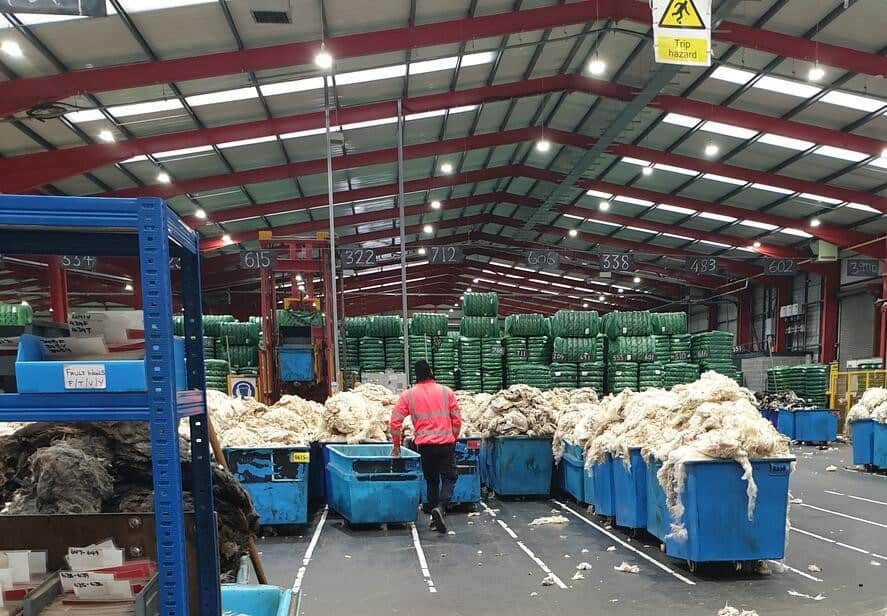
We donned our warm layers and reflective jackets for our tour of the grading warehouse and walls of wool. The grading too has joined the modern age with everything barcoded. This is all part of the traceability that is being used to make “Yorkshire blankets from Yorkshire wool” and the like.
All the grading is done by hand with a bewildering large number of different grades and bins for different grades of wool. No wonder it takes years to become a skilled grader. Each graded lot is then packed into a bale that is then core tested and matched into a lot of wool with the same grades.
The core samples are then sent off to be tested; the results of the tests are what is then in the auction catalogue along with the grading information so the buyer knows how much vegetable matter and grease is in the wool and how much colour it will take if they want to dye it.
All the wool is sold pre–scouring, and it’s the new owners who collect it and then take it to the scouring plant.
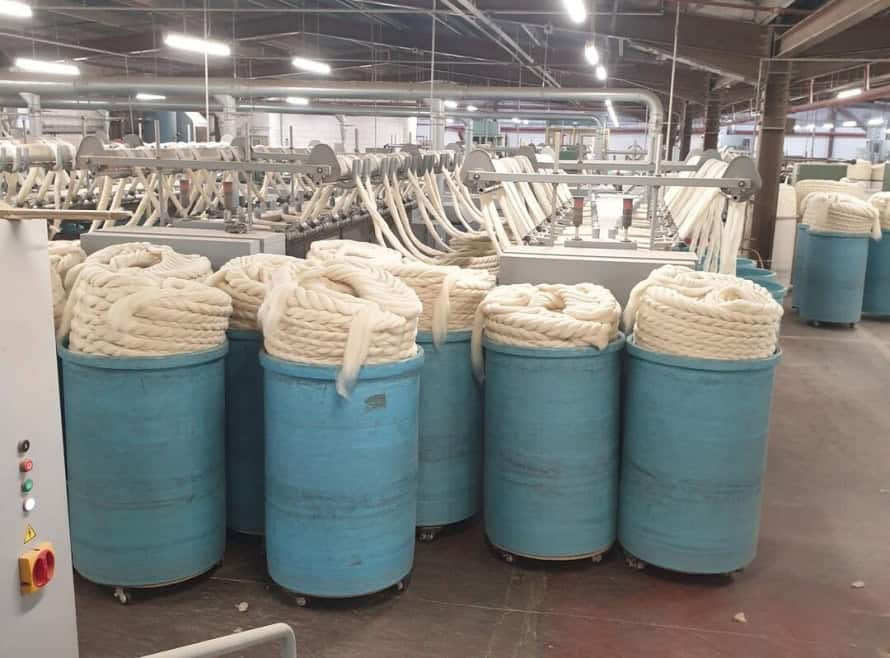
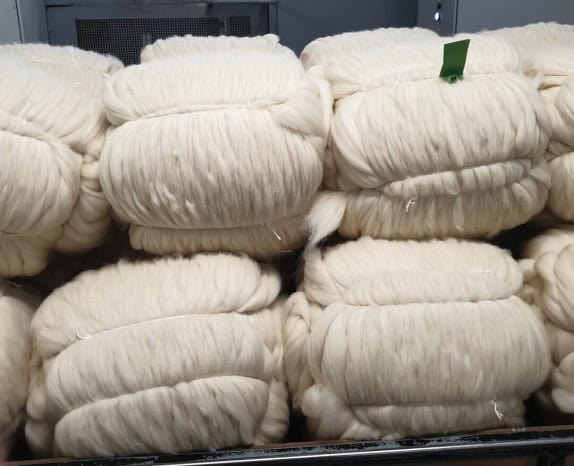
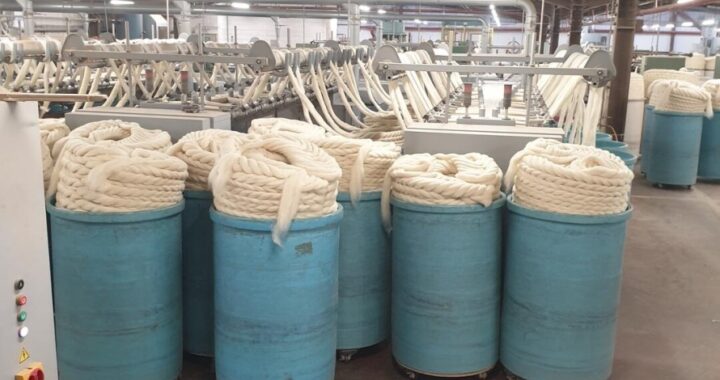
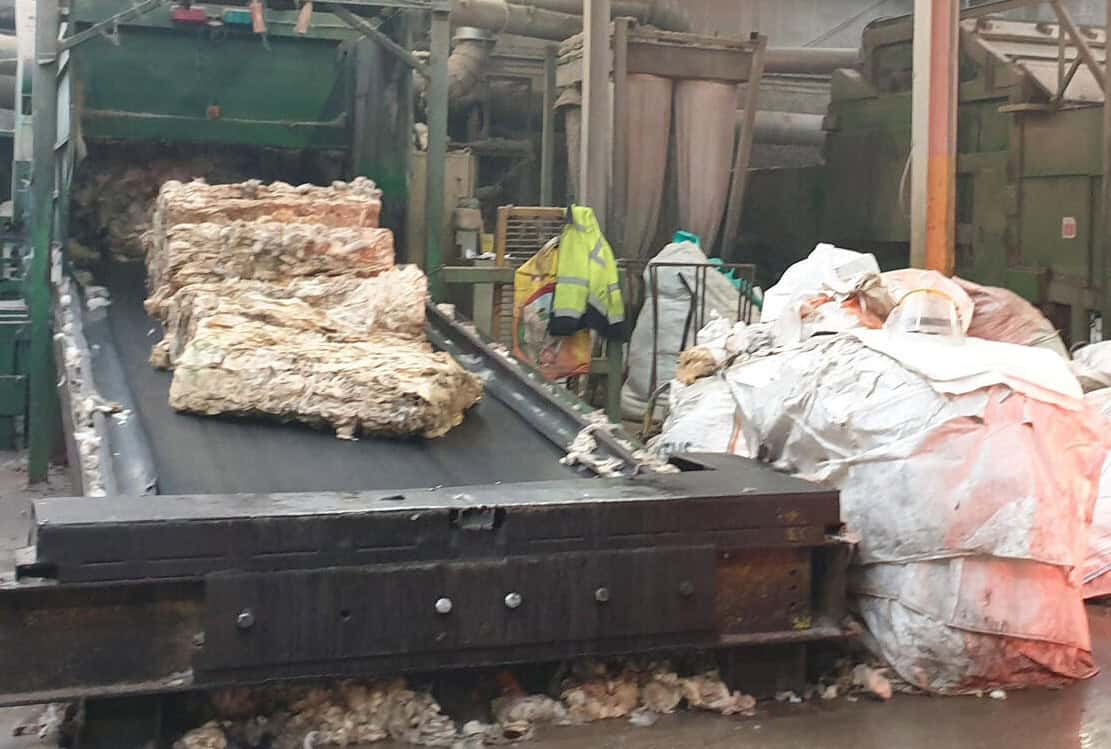
The scouring plant we went around is Haworth’s and was a drive across town. Bradford’s roads are mix of potholed tarmac and cobbles. We were shown around by a very enthusiastic manager whose pride and joy was the new biodigester. He walked us round the whole process from wool coming in to the carding and combing, again it is all barcoded so each batch is kept separate or mixed as the customer requires.
There are only three large scouring plants left in Europe, two are in Bradford and one is in the Czech Republic, and I’m not sure that without them British Wool would be viable. And then what would we do with our wool.
This tour is organised by British Wool and is for all of its farmers and includes lunch, and while it might be a long way to go, it’s well worth it.