American Jacobs

The Jacob Sheep: Celebrating the UK and USA Breeds

They look like something painted in a dream, multi-horned, piebald, half-wild and yet the Jacob sheep has been calmly grazing in British fields for centuries and standing sentinel in American pastures since the early 20th century. It is a breed that holds together opposites: primitive and modern, ornamental and practical, sacred and commercial.

In both the UK and the USA, the Jacob sheep has inspired fiercely loyal communities. But the two countries have chosen diverging paths: the UK, aiming for utility and refinement without losing the breed’s essence; the USA, preserving a living relic of ancient genetics and form. These aren’t contradictions-they’re complementary philosophies, both rooted in love for the same remarkable animal.

This article walks between these worlds, mapping where the paths split and where they still run side by side.

Origins and Divergence: The Breed’s Transatlantic Journey

Jacob sheep have long drawn attention for their unusual appearance: a piebald fleece, black, brown or lilac patches on white, and two or four horns (sometimes more). Their appeal is more than skin-deep—they are alert, hardy, and intelligent, with a calm temperament and versatility in both meat and fibre production.

Though they descend from the same stock, UK and US Jacob sheep populations have diverged. In the UK, the emphasis has shifted toward conformation and utility, while in the US, breeders have prioritized retaining a broad phenotype reflective of early imports, with greater variation in size, horn type, and wool quality.

At a Glance: Breed Standard Differences

Feature UK (Jacob Sheep Society)   USA (Jacob Sheep Breeders Association)
General Type Upstanding, deep-bodied, sturdy commercial animal Fine-boned, primitive, smaller stature
Head Clear white blaze, black cheeks, black ears preferred; wool-free forward of horns; dark nose preferred Slender, triangular head; large symmetrical eye patches; clear white blaze; dark-pigmented nose in adults
Horns Always horned (2 or 4); black preferred; 4-horned: top pair upright, spaced; 2-horned: spaced from cheeks 2, 4, or more horns (occasionally 6); must be well-differentiated and balanced; black or striped horns; polled sheep disqualified
Fleece/

Markings

White with well-defined black patches; clear, symmetrical markings preferred White with black or lilac patches; “badger-faced” (black cheeks, muzzle, white blaze); 15–85% coloured; random spots
Legs White legs preferred; black hooves White or with coloured patches; black or striped hooves; all dark legs not preferred
Body Size Rams: 70-90 kg (154–198 lb); Ewes: 55-70 kg (132–155 lb) Rams: 54–82 kg (120–180 lb); Ewes: 36–54 kg (80–120 lb), but generally finer-boned and smaller in appearance
Disqualifications Polled sheep, excessive white or black, poor horn structure Polled sheep, all black legs, absence of facial markings, poor horn structure

Some examples of American Jacobs

Pictures with kind permission of the ‘Jacob Sheep Breeders Association’ – USA

Judging and Presentation in the Show Ring

UK Shows:
UK show standards emphasize commercial conformation, symmetrical markings, and adherence to the Jacob Sheep Society’s breed guidelines. Judges prefer sheep that are robust and dual-purpose-offering both wool and meat-while maintaining traditional features. The focus is on flock improvement and the breed’s viability within modern agriculture.

USA Shows:
US shows lean toward preservation of primitive traits. Judges favour sheep with balanced, natural horn growth, distinctive spotting, and minimal grooming or alteration. The goal is to maintain the breed’s ancient appearance and genetic integrity rather than to optimize for commercial traits.

Breeding Philosophies and Priorities

UK Breeders:
Jacob sheep in the UK are bred to enhance body size, commercial value, and conformation. Breeders focus on improving fleece quality and carcass traits, while maintaining the breed’s signature multi-horned appearance and distinctive markings. This practical approach ensures the Jacob sheep’s continued relevance on modern farms, with an emphasis on meat yield and fleece uniformity. Rams and ewes are specifically chosen for their larger frames and well-marked fleece.

USA Breeders:
USA breeders emphasize maintaining the Jacob as a heritage breed. The term “primitive” is used in the classification sense, but this does not imply the sheep are unimproved or impractical. American Jacobs serve niche markets for wool, meat, pelts, skulls, and horn crafts. Breeders work to maintain heritage traits close to the original imports, while selecting for finer fleeces within a broad JSBA standard. Individual breeders may focus on two-horn or four-horn lines, black or lilac colorations, or specific wool characteristics—resulting in a diverse yet carefully maintained population.

Societies and Global Community

United Kingdom:
Founded in 1969, the Jacob Sheep Society (JSS) maintains a closed flock book, defines breed standards, and runs national and regional shows and sales. The Society supports ongoing improvement, education, and promotion of Jacob sheep within the UK and internationally.
Website: https://www.jacobsheepsociety.co.uk

United States:
The Jacob Sheep Breeders Association (JSBA) and the American Jacob Sheep Registry support breeders and uphold standards across the USA. The JSBA maintains an open flock book, allowing animals of unregistered parentage to be inspected and, if they meet breed standards, enter the registry. This approach broadens genetic diversity and accommodates varied breeder goals, from horn configuration to wool finesse.

The Jacob Sheep Breeders Association (JSBA) was formed in 1985 and oversees registrations, breed standards, and outreach for Jacob breeders across the US. It promotes the conservation of the original Jacob phenotype.
Website: https://www.jsba.org

Other Countries:
Jacob sheep are found in Canada, Israel, Australia, and other countries, often following either UK or US breed standards. While national societies remain independent, many share knowledge and support global preservation efforts.

Celebrating Differences, Honouring Tradition

A Shared Passion for Jacob Sheep

Despite geographical differences and distinct breeding focuses, Jacob sheep communities in the UK and USA share a profound respect for this ancient breed. Whether Jacobs are bred for meat, wool, or cherished as a living connection to pastoral history, they consistently inspire passion and pride in their keepers.

Preserving Heritage, Ensuring Future

Both the UK and USA Jacob sheep communities are dedicated to preserving and promoting this extraordinary breed. While their approaches vary—the UK emphasizes commercial refinement, while the USA focuses on primitive conservation—they are united by a common goal: ensuring the Jacob sheep flourishes now and in the future.

Recognising the value of structured improvement alongside the importance of maintaining heritage traits allows for diversity without compromising the breed’s identity. The Jacob sheep, with its distinctive spotted fleece and multi-horned head, remains unique not only in appearance but also in the remarkable stories woven through its evolution on both sides of the Atlantic. Appreciating these differences strengthens the international Jacob sheep community, offering a more complete picture of the breed’s rich identity. It’s one breed, with two expressions, both truly worth celebrating.

word image 12747 1

Lambing Off-Script: Out-of-Season Breeding with CIDRs and Sponges

by Terry Barker

Jacob sheep are a breed close to my heart, and like many traditional breeds, they march to the beat of a seasonal drum. Ewes naturally cycle as the days shorten, which means most of us see lambs in the spring. It’s a rhythm that works, but sometimes, you need a different tune. Maybe you want lambs on the ground earlier for a specific market or show, or perhaps you want to split your lambing period to ease the workload. This is where out-of-season breeding comes in, using tools like CIDRs and sponges to gently nudge your ewes’ reproductive cycles.

What are CIDRs and Sponges?

Think of these devices as temporary hormonal assistants. Both are small, prescription-only devices that you insert into the ewe’s vagina. They work by slowly releasing progesterone, a hormone that essentially convinces the ewe’s body that it’s pregnant, preventing ovulation.

  • CIDRs (Controlled Internal Drug Release devices) are typically Y-shaped plastic devices. They’re easy to insert and tend to be less messy.
  • Sponges are soft, tampon-like foam blocks soaked in progestogen, a synthetic version of progesterone.

After being in place for about 12 to 14 days, the device is removed. The sudden drop in progesterone tells the ewe’s body to prepare for ovulation. Within a tight window of 24 to 48 hours, she should come into season. If you have a ram on standby, mating usually follows. For a more predictable and powerful response, especially out of season, many keepers use a teaser ram or a hormone injection like PMSG at the time of removal.

Why Go Off-Season?

There are several reasons why I—and other keepers—might consider this approach:

  • Catching the Early Market: Lambs born earlier may be ready for spring shows or early markets when prices are at their highest.
  • Balancing the Books (and Your Back): Splitting your lambing period can help you manage your workload, spreading the sleepless nights and intensive care over a longer period, in controlled batches.
  • Managing Your Flock: It’s a great way to synchronise large groups for more efficient AI or to advance the breeding of a young shearling without waiting a whole year.
  • Making the Most of Your Space: If you’ve got limited indoor shelter, lambing earlier can help you avoid the muddy chaos of a wet spring.

A Step-by-Step Guide to Synchronising Ewes

This isn’t a strategy you can rush into. It requires careful planning and attention to detail.

1. Choose Your Ewes Wisely: Start with healthy ewes in good condition (a body score of 3.0 to 3.5 is ideal). They should be proven breeders, disease-free, and already cycling naturally.

2. Insert the Device: Always wear gloves and use a lubricated applicator to keep things clean. Hygiene is non-negotiable here.

3. Set a Timer for 12–14 Days: This is the sweet spot. Leaving the device in for too long increases the risk of infection.

4. Remove the Device: I like to mark the date and time on a calendar or in my phone’s notes. Consistency is key.

5. Consider PMSG/eCG: Administering this hormone injection at the time of removal gives you a much stronger and more predictable ovulation response, especially out of season.

6. Introduce the Rams: Some people bring in a teaser ram at the time of removal, and then the fertile ram 24 to 48 hours later. I choose to put my ram in straight away.

7. Watch and Wait: The ewes should cycle within a very tight window, and lambing will follow a similarly synchronised pattern about five months later.

Other Ways to Lamb Out of Season

While CIDRs and sponges are a highly effective method, they’re not the only option. Some shepherds prefer more natural approaches or a combination of strategies to encourage out-of-season breeding.

  • The “Ram Effect”: This is a powerful, natural form of synchronisation. Ewes that have been kept entirely separate from rams for at least a month will often come into season shortly after a ram is introduced. The sight, sound, and smell of the ram triggers a hormonal response in the ewe. Using a teaser ram first can be a great way to “jump-start” the process and save your fertile ram’s energy for when the ewes are ready.
  • Flushing: Improving the ewes’ nutrition just before breeding can dramatically boost reproductive performance. By increasing their energy intake, you put them into a positive energy balance, which can lead to higher ovulation rates, even during off-season periods.
  • Breed Selection: While Jacob sheep are seasonal, some breeds, or specific lines within a breed, are naturally less seasonal than others. Focusing on genetics for reduced seasonality can, over time, help you build a flock that is more willing to lamb out of the normal spring window.

The Fine Print: Pros and Cons

Like any intervention, there are trade-offs to consider.

Pros:

  • A very tight lambing period, often just 5–7 days.
  • Perfect for AI and embryo transfer programs.
  • Gives you ultimate control over your breeding dates.
  • It’s a reliable way to bring ewes into season in the spring or summer.

Cons:

  • The cost: CIDRs, PMSG, applicators, and vet bills all add up.
  • A risk of infection if hygiene isn’t perfect.
  • Not a fool proof solution—some ewes, especially if they’re too far out of their natural cycle, just won’t respond.
  • It requires precision and planning.
  • The use of hormones may affect organic certification.

A Final Thought on Responsibility

It’s crucial to remember that in the UK, CIDRs and sponges are prescription-only medicines. You need to get them from a vet and follow their instructions to the letter. This isn’t a quick fix; it’s a responsible, carefully considered tool.

For me, the goal isn’t to force my flock to do something unnatural. It’s about having the flexibility to manage my farm in a way that works for me and my schedule. Synchronising ewes for out-of-season lambing isn’t for everyone, but done with care and forethought, it can be a game-changer for your flock management.

What are your thoughts on out-of-season lambing? Have you tried it, or are you a firm believer in letting nature take its course?

A group of sheep grazing in a field AI-generated content may be incorrect.

The Rorschach Fleece: Interpreting the Jacob Sheep

By Terry Barker

A goat with horns standing in a field of grass AI-generated content may be incorrect.

A freshly shorn Jacob fleece is a Rorschach test. You see a badger. I see a map of Wales. Someone else sees the face of their ex.

Our brains are hardwired to find patterns, and Jacob sheep are covered in them. No two markings are the same, yet some families pass down visual quirks as faithfully as a surname: a lightning-bolt blaze, a skullcap patch, a bandit mask. These unique cues shape how we relate to—and judge—our flock.

A black ink blot on a white background

Livestock showing is essentially a beauty contest, focused on symmetry, cleanliness, and bone structure.

But in the Jacob world, beauty is chaos. You’re not breeding for a pure white fleece or a uniform look; you’re juggling horns, fleece quality, and the endless surprise of marking variation.

This drives some judges mad. It delights others. There is no perfect Jacob. There are only contenders.

And in the human mind, something strange happens: we start to assign meaning. That ewe with the eye patch? She’s cheeky. The ram with the brown neck and four symmetrical horns? Aristocratic. The lamb with the full white face and dark body? A poet. Possibly troubled.

This is pareidolia: the same mental trick that lets us see faces in clouds or Jesus in toast. In flock keeping, however, it goes deeper. We remember sheep by markings, assign personality by silhouette, and—quietly—fall in love with patterns that remind us of untold stories.

Breeders often talk about ‘a look I like’. They’ll walk away from a technically perfect animal because something ‘feels off’, or they’ll chase a bloodline for five years because the granddam had ‘that look’. This is psychology, not science.

Which raises a heretical thought: what if some of our best Jacob sheep are products of superstition, aesthetic bias, and pure gut instinct? What if that’s precisely what makes them good?

A group of sheep grazing in a field AI-generated content may be incorrect.

We should, of course, record fleece micron count and horn structure. But we should also admit: part of the magic is that we don’t quite understand why we prefer one over another. And in that mystery lies the real joy.

You don’t just keep Jacob sheep; you interpret them.

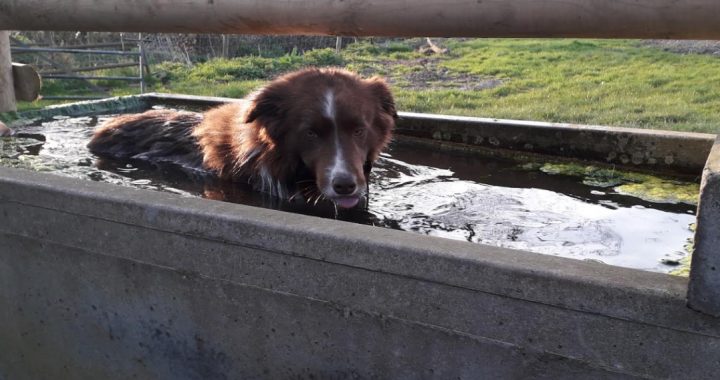
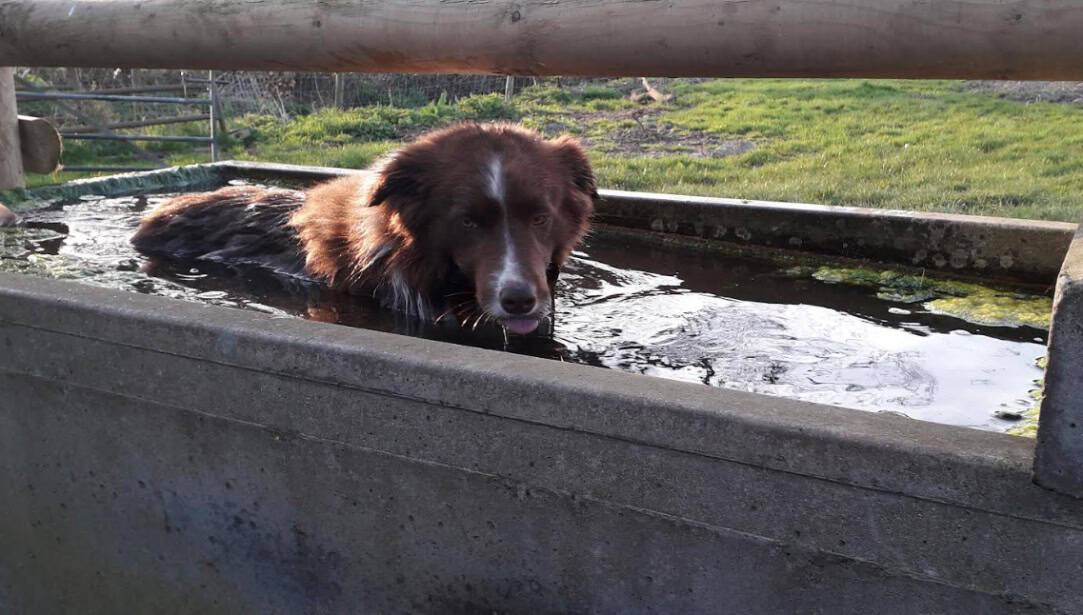
A dog in a trough AI-generated content may be incorrect.

You cannot shepherd without a good dog…………

By Janet East

This comment was made by the best shepherd that I have had the privilege to meet, although our first meeting was one which I still look back on with horror. The worst ever farming nightmare I’ve ever had, was when I woke up to a scene which words cannot really describe.

On checking my flock one morning, I was faced with devastation. My heart sank at the sight: several ewes and lambs lost, others distressed and injured – the aftermath of a fierce and vicious dog attack. I couldn’t speak, couldn’t think straight and just wept. That was weak on my part and didn’t achieve anything, so, pulling myself together, I went indoors and called the necessary people to help clear the terrible scene I faced

Within hours I heard a knock at the back door and what faced me also looked horrific! A middle-aged male, certainly grumpy, with bushy eyebrows like you’ve never seen. He stank of sheep and his sheepdog, which smelled even worse, stood looking silently evil and carried a necklace of clinkers around his collar more commonly known as sheep daggings! His name was Mush - that’s the dog. The male object was none other than the infamous local shepherd called Richard, whose name and reputation came before him.

The conversation that ensued was quiet, informative, honest, but serious. Those couple of hours changed my life regarding shepherding and Richard became not only my mentor, but a wealth of valuable information about sheep, but how to manage them and make life as easy as possible. – the art of good shepherding. The trouble was we’re both strong characters, full of our own opinions and slightly stubborn - a good recipe for regular differences of opinion. My first lesson came quickly!

“Janet, you cannot shepherd effectively without a dog.”

Yes, I can, I do well now without a dog.”

“Yes, you shake the bucket, and they run towards you, that’s because they love the expensive, unnecessary food you are giving them. One day they will turn a blind eye and then you’re in trouble. I’m telling you woman, you need a dog”

The options were a trained dog - couldn’t afford it, and what was the fun in that, or … a pup, which, of course, would be of no real benefit for at least 12 months or more. It had to be the latter option, and I’d have to keep shaking the bucket for a while longer.

Scanning the local papers, I soon came up trumps and I set off to see a litter of border collies. I thought all puppies were gorgeous, but not this litter – they were a mixed bag of ugly, timid, wormy looking pups. Poor things. I took pity and said I am sure I could sort it. Richard told me not to be so blinking stupid and told the owner, in no uncertain terms, that we were not purchasing!

The next litter - gorgeous, playful, beautiful coats and, yes, you could take the lot home. I’ve been brought up in a male world at home and at work and they are uncomplicated (well most are) and so a dog it had to be. I called him Jack - a strong tri-coloured, handsome dog.

The next 12 to 18 months were great. I was learning - Jack was a great pupil and Richard a miserable, demanding, good teacher. Bucket shaking was diminishing, but not redundant.

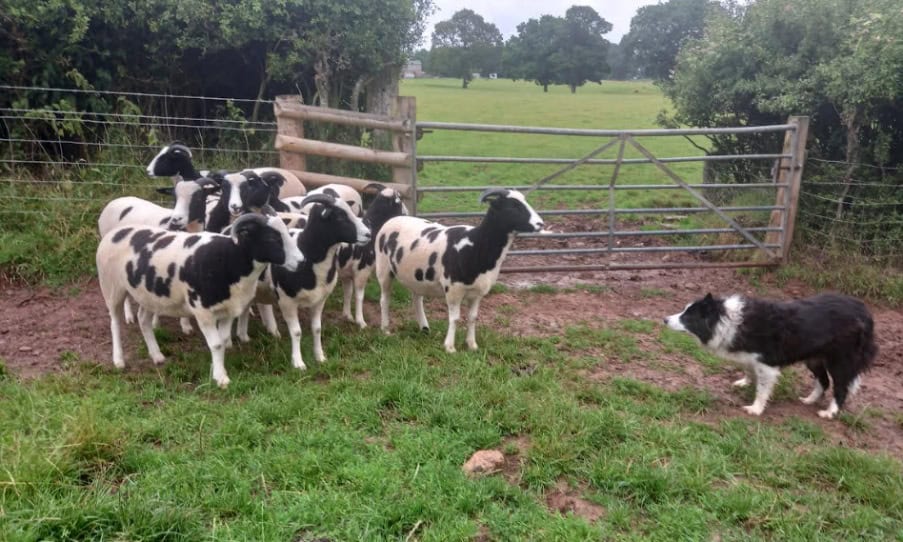
A group of sheep in a fenced in area AI-generated content may be incorrect.

After a very long hot morning moving sheep, worming and general maintenance, Jack was tired, long tongue hanging out and panting and soaking wet from a quick dive in the sheep trough. Richard declared “You need another dog.”

I quickly retorted “No I don’t, Jack is brilliant and so young.”

“He might be all those things, but one day some idiot driving too fast down the lane will run the dog over, or worse still, you might, by accident, ………………. I know - I’ve done it.”

Kipper, number two dog, was big, bold, better bred, had style and class and, I suppose, I had improved as well. Jack and Kipper worked well together.

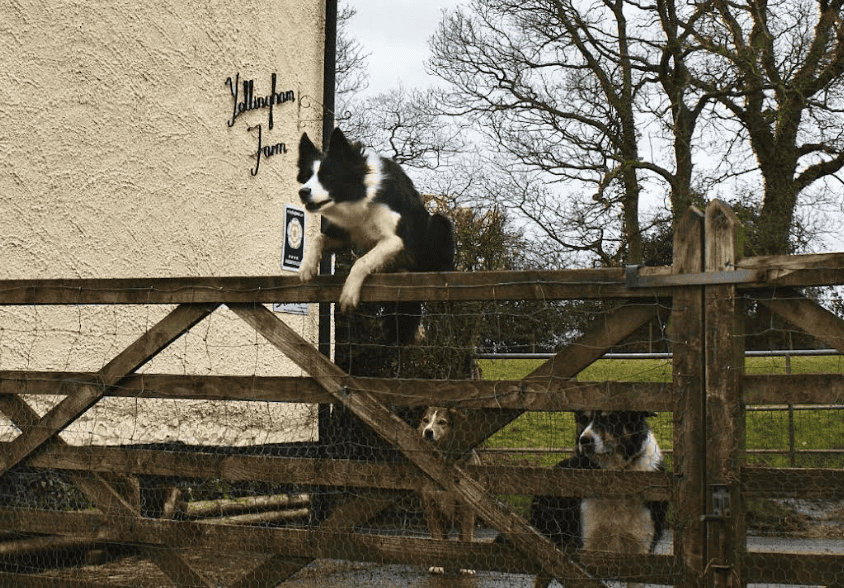
A group of dogs on a fence AI-generated content may be incorrect.

Kipper was running so well that Richard persuaded me, against all odds, to enter a sheepdog nursery trial. I was convinced that I was not good enough, would make a fool of myself and the dog. We practised at home in earnest and the day soon arrived. Even on the journey there in Richard’s disgusting, minging, sheep-smelling truck (complete with the equally disgusting, sheep-smelling Mush!), I was trying my hardest to pull out. No chance.

My turn came, up to the post we went, shaking, worrying, what was I doing. I sent Kipper “away to me” (out to the right). He gathered the six sheep, brought them steadily to me in a relatively straight line, round the back of me and they set off on the first short drive, aiming for the two fetch gates and the gap - a difficult thing for a dog, as they naturally want to bring sheep to you, not drive them away from you. So far so good. Through the gates - “come by Kip” …. no response, “come by Kip” ……. no response. S**t. The dog had gone totally deaf, and he drove the sheep steadily on and on, not listening to me at all and ended up driving them into the little stream bordering the trials field.

Total embarrassment as over the Tannoy the judge said “I think you need to retire Mrs East”. Given sheep hate water, Kipper was clearly impressed - at home he struggles like mad to push them through water-logged gateways. When I eventually got to him and the sheep, he bounded up to me, tail wagging furiously, so pleased with his efforts. He thought he’d won the day. I had to smile.

A dog in a trough AI-generated content may be incorrect.

I was embarrassed, but, perhaps, not quite as much as the gentleman who ran after me. He sent his dog “away to me”, running beautifully, past the sheep, on and on - but the dog was soon totally out of sight amid gallant efforts at concise whistle commands which soon degraded into abusive verbal commands by his owner to stop his progress. The dog was found some distance down the road at the local pub!

My trialling career started and ended on the same day..!

A group of goats in a pen AI-generated content may be incorrect.

Jacob wool jumper

Wool Beyond the Grave: Jacob Sheep, Burial Textiles, and the Ghosts in Your Jumper

Introduction: In 2022, archaeologists near Carlisle uncovered something quietly remarkable—a body curled within a peat bog, time-paused and waxen, as if the earth had been holding its breath. The man wore a rough tunic, undyed and simple, woven from a mottled, two-tone wool: dark against light. The pattern rang familiar.

Jacob wool.

But he had died more than 1,800 years ago.

Before you grab a pitchfork and declare your neighbour’s flock ancient royalty, let’s take a breath. No one’s claiming he kept registered pedigree sheep. And yet, in the folds of that ancient garment lies a whisper of something stranger—that piebald fleece, once shunned or overlooked, might have once carried greater meaning. Perhaps even reverence.

A brown and white sweater on a mannequin

The Coat of Contradictions

Jacob wool doesn’t conform—and that’s its genius. It’s coarse and soft. Structured and unruly. Black and white, but never grey. It asks not for haste but for handling, with patience and curiosity. You can dye it, but most don’t bother. Its natural colours speak in smoke and cream, snow and shadow.

When you wear Jacob wool, you wear contradiction—and harmony.

Modern fashion, with its glossy uniformity, still doesn’t know quite what to make of it. Jacob fleece resists standardisation. Each one differs. Some are crimped and cloudlike. Others, wiry and windproof. Machines falter. Hands rejoice.

This is wool that reads like a biography.

When Sheep Were Sacred

In Iron Age Britain, animals that stood out didn’t simply feed or clothe—they signified. Unusual coats and twisted horns marked sheep as something more than stock. They were tethered outside granaries, buried with the honoured dead, or watched like omens grazing along the fence line.

To dismiss such beliefs now is easy—but perhaps we shouldn’t. There’s a quiet poetry in the idea: the Jacob as a living emblem of balance. Black and white. Earthy and ethereal.

And over time, that symbolism may have worked itself into the very fibre of the wool.

Wool as a Memory-Keeper

Here’s an overlooked truth: sheep carry culture.

In their fleece lie histories. Landscapes. Economies. Jacob wool tells a story of cold winters, stolen commons, ritual oddities, and the eccentricities of 18th-century landowners with a taste for the exotic.

To spin it is to join that lineage. You become part maker, part archivist—crafting something useful, beautiful, and a little rebellious.

It’s the kind of wool you might be buried in—if only to baffle the archaeologists of the future.

So Why Aren’t We All Wearing It?

Short answer: it doesn’t tick boxes.

Jacob sheep resist scaling up. No two fleeces are exactly alike. Commercial buyers, craving predictability, frown at that. They want ivory, not ink. But Jacob fleece asks for something else: care. Attention. Choice.

And for those who spin, weave, or wear it—that’s the point.

It won’t match. It won’t comply. And that’s what makes it matter.

A person in a brown Jacob wool coat

A Case for Wool With Character

At the Jacob Sheep Society, we steward more than just genetics. We preserve texture. Colour. Story. We carry forward a tradition that says sheep are more than scenery—and wool, more than filler.

If you’ve never handled a Jacob fleece, start there. Touch it. Smell it. Pick out the bits of bramble by hand. Learn its moods. Spin it thick. Spin it whisper-fine. Don’t chase flawlessness. Chase character.

Then make something bold. Something offbeat. Wear it to the shops. Wear it to a wake. Wear it where no one else would.

Because Jacob wool doesn’t whisper.

It remembers.

Conclusion: Curious about Jacob sheep? Want to try your hand at fleece, yarn, or just a good story? Join the Jacob Sheep Society—and connect with a breed that carries the past on its back.

A person spinning jacob wool

A couple of Jacob Sheep

The Ruminant Republic: What Jacob Sheep Teach Us About Democracy

Introduction

You’re in a field. A bucket swings from your hand. Twenty-five Jacob sheep stare at you. You’ve brought the blue bucket. But they were expecting the green one.

A single ewe steps forward. She sniffs. She walks away.

The rest follow.

That was a vote.

Flock Logic Is Not What You Think

Jacob sheep don’t appoint leaders. They don’t hold elections. They don’t publish manifestos. But watch them long enough and you’ll see a system that functions with eerie efficiency.

Older ewes usually take the lead—but only until they’re wrong. Then someone else steps in. Leadership in the flock is borrowed, not owned. It’s earned through experience, confidence, and that indefinable sheepy presence that says, “I know where the grain is.”

Sound familiar?

In human terms, this is something like participatory democracy, minus the shouting. And the ties.

Rams Are Decorative

Let’s get this out of the way.

Rams in a Jacob flock are mostly ceremonial. They strut, pose, and get photographed. They sire lambs. But when it comes to movement, risk assessment, or navigating new terrain, it’s often a ewe who leads. The ram might go first, but the ewe knows when to go.

In some flocks, we’ve seen younger rams attempt power grabs—usually involving headbutts, uphill charges, or elaborate performance rituals. These end in embarrassment. Sometimes mud. Often bruised egos.

The ewes? They move on.

Leadership by the Bucket

If you’ve ever accidentally grabbed the wrong feed bucket and watched your flock turn away, you’ve been outvoted.

Jacob sheep respond to symbols—colour, sound, tone of voice, scent. Trust builds slowly and vanishes instantly. Change the bucket, change the message. The sheep know.

There’s no committee. There’s just quiet disobedience. No bleating, no fuss—just a mass, dignified turning of backs. A peaceful protest with hooves.

It works.

Every Flock Has a Backbencher

Some ewes don’t lead or follow. They linger near gates. They interrupt. They do sideways things.

These are your disruptors. In a human system, they’d be the awkward questions at AGMs. In a flock, they’re essential. They challenge momentum. They make the others think.

Keepers often give them names like “Gillian” or “Theresa” or “Oi.” They have wild eyes. They’ll be the last in the shed and the first out. If they were people, they’d have PhDs in structural irony.

Celebrate them.

Lessons for Human Committees

The Jacob Sheep Society is a cooperative body. We rely on voluntary effort, shared vision, and a love of something gloriously impractical. Sound familiar again?

Here are three rules you can steal from your flock:

  1. Rotate leadership. One ewe can’t lead every journey. Let others take the front when it’s their terrain.
  2. Listen to disruption. If someone always says “no,” ask them why. Don’t fence them off. They may be facing a direction you haven’t looked yet.
  3. Use the right bucket. Presentation matters. Signals matter. Sheep know when something feels wrong. So do people.

Democracy Without Minutes

Sheep don’t minute their decisions. They don’t need to.

But the structure of their society—fluid leadership, consensus movement, group safety over individual power—might just outlast some human systems. Maybe that’s why we’ve been keeping them for ten thousand years.

So next time you’re faced with a tricky committee decision or a split boardroom, consider the sheep.

Watch. Wait. Bring the green bucket.

Let the flock decide.

Conclusion

Inspired by your flock? Thinking of joining the Jacob Sheep Society? Become a member today and be part of something stubborn, beautiful, and quietly revolutionary.

A couple of Jacob Sheep

Lamb Cam

Barn Cameras or Lamb Cams…!

Keep Your Baa-bies Close, Even When You’re Not:

  • Setting Up a Dedicated Video Surveillance Camera for Lambing Season

January, like a new-born lamb, stumbles into being, bringing with it the flurry of lambing season. For us sheep farmers, and especially those who lamb early, it’s a time of endless cups of coffee, missed meals, bleating lullabies, and, well, let’s face it, a tad bit of worry. After all, you can’t be glued to the lambing shed 24/7. But fret not, shepherd! Technology offers a helping hoof with a dedicated mobile hotspot and security camera combo, letting you keep tabs on your ewes from afar.

What You’ll Need:

  • A dedicated mobile hotspot: This handy device uses a mobile phone SIM card and acts like a mini Wi-Fi router, broadcasting a signal you can connect your camera to. Choose one with good battery life and signal strength. Ideally you need a plug socket to power it. Here is an example picture, there are a few different types. (Read the reviews before buying one…!)

A black electronic device with a logo

Description automatically generated

  • A weatherproof security camera with night vision: opt for one with its own APP for easy viewing and recording. Motion detection would be an extra baa-nus! Again, there are many different types to look into, so read the reviews first. Most cameras are very similar to each other. Resolution is one aspect to consider, the higher the resolution, the better the picture.

Just a note, you can buy cameras now with a built in mobile hotspot. So read the specifications before you buy. These type can be a lot more expensive.!

  • A white camera with a circular lens

Description automatically generated
  • A SIM Card: Nowadays you can buy a SIM card at a very low monthly cost, and if you buy on a monthly contract, you can always cancel it when lambing is over. Check which networks have good coverage where you are. Remember it will be inside a building, so the reception needs to be good. You can use any of the major mobile network websites to check which signals are strongest in your area. You can check by postcode.
  • A local power source: Hopefully, as mentioned, you have a plug socket somewhere handy. (get that 50m extension lead out.!) But if not then consider solar panels or a 12v car battery to keep your camera juiced. A rechargeable ‘power-bank’ is another option.

How to Set Up Your Remote Lambing Watch:

Before I get into the detail, one thing to note is that ALL of this should be set up and tested at home first.! Its best to get the kit all working while you are sat in the warm having a cup of coffee.! You don’t want to be half way up a ladder in the freezing cold wondering what the wi-fi password is…! (Take my word for it.!)

Right…

1. Install the Camera APP. Make sure you have the camera APP downloaded onto your mobile phone or tablet. (Refer to the manual for which APP to use and how to configure it)

2. Place the hotspot: Find a central spot in the lambing shed with good signal strength. Remember, walls play hide-and-seek with Wi-Fi, so adjust accordingly.

3. Connect the camera to the hotspot: This will vary depending on your camera model, but generally:

  • Turn on the hotspot and give it a shepherd-worthy name and password.
  • You may have to connect your phone / tablet to the new hotspot wi-fi for the APP to work at this stage.
  • Put the camera in Wi-Fi pairing mode. (Consult the manual for the secret handshake!)
  • Select the hotspot network on the camera app and enter the password.

4. Tweak camera settings: Customize your lambing watch experience:

  • Motion detection: Get notified when something (hopefully a woolly wonder!) stirs. (This can be problematic, as you may get a notification every time the ewes move…!)
  • Night vision: See clearly even when the moon plays hide-and-seek.
  • Data usage: Check what your data download limit is on your chosen SIM card. As a rough estimate, streaming a 720p video feed, 4 times an hour for 5 minutes each time, 4 hours a day, every day for a week would use approximately 1GB per week. (Reducing frame rate and resolution will reduce data, as will using a H264 codec setting on your camera). I use a 12GB per month data plan and that is ample on three cameras. This plan currently costs me about £6 a month.

5. Test and adjust: Check the camera feed on your laptop or tablet or mobile phone (just like any Wi-Fi device!). Reposition the camera or hotspot if needed.

6. Monitor and rejoice! Now you can watch your ewes birthing remotely, offering them privacy while staying in the loop, no matter where you are. But remember, even with a camera, occasional visits are still key!

With a dedicated mobile hotspot and camera, you can watch over your lambing flock like a watchful sheepdog, ensuring their comfort and safety while giving you peace of mind (and maybe even a few adorable lamb videos to share!). Happy lambing season!

A person sitting at a desk looking at a computer screen

Description automatically generated

OBSERVATIONS OF JACOB SHEEP

Observations of the Jacob Sheep

Lesley Partridge

At the Central Region Autumn Open Day I took a selection of printed photo panels which I had made to illustrate different aspects of the Jacob breed. The two topics discussed on the day were Jacob markings and ear set and temperament. The following article expands on this discussion a little more.

C:\Users\Clive\Downloads\0  PLATE 1 MARKINGS AND COLOUR GENES.jpg

Although they don’t look it, Jacobs are essentially black sheep carrying two dominant black genes, Ed Ed BB. In the first three months of life in the embryo it is an important time for the distribution of pigment. Embryonic stem cells are called the Neural Crest where they generate a wide variety of cell and tissue types during embryonic and adult development. The cranial Neural Crest gives rise to the majority of the bone and cartilage of the head and face, nerves, muscle tissues and pigment cells.

There are three important sites where the pigment or Melanoblasts first start to develop, on the top of the head, near the eye, near the ear, and several other places on the body. Once the pigment cells have finished migrating they then take up positions at the base of hair follicles which are then referred to as Melanocytes. A few pigment cells then migrate outwards joining up to form larger patches on the top of the head. According to Cattanach 1999: “they then spread out until they meet under the chin, then spread down the sides of the body.”

There is a recognised importance for the black Melanocytes to be present on the brain area to regulate mood and temperament, but a failure of them not reaching there will cause seizures and diverse behaviour.

RECESSIVE WHITE SPOTTING

The Jacob carries a recessive white spotting ss gene which affects not only the change of black to white, but also the structure of the wool making the white areas much finer. This can be seen in lambs’ fleeces of the ‘patchwork/Intermediate’ type where the white wool appears short and fine, and the black is coarse and long. Experience in breeding Jacobs suggests that the recessive white ss gene in some sheep can produce different strengths of pink skin.

STRONG ss WHITE

In its strongest form it produces very blood red pink skin. Pedigree breeders try to select for ‘clean’ skin in their show and breeding stock. Some Jacobs will stay 90% clean pink skinned for most of their lives.

MEDIUM ss WHITE

Some sheep are born pink skinned but develop pale spots with increasing age. Skin blemishes can fade during the winter months only to appear again in the presence of the summer ultraviolet light. In others, the black base pigment can gradually show through as freckling allows fibres of black wool to grow from the spot of pigment.

WEAK ss WHITE

Although born pale, the whiter woolled skin areas can develop into a blue/grey colour, darkening with age .This skin colour was quite common in the early days before breed improvement had started.

BLACK PATTERN MARKINGS

C:\Users\Clive\Downloads\0  PLATE 2  UK EXHIBITION VARIATION.jpg

C:\Users\Clive\Downloads\0  PLATE 3  BREED VARIATION.jpg

It seems there is very little scientific information about ‘Black Patterns Over White Spotting’ in livestock. My own field observations suggest there seems to be a big variation of intensity of the black marking gene over a recessive white gene background. The chart below shows the range of black marking variation I believe to exist:

  • Large body spots Plate 2 A, D and Plate 3 A,D,F
  • Small body spots Plate 2 B,C Plate 3 B,C,E
  • Head mask Plate 2 A,B,C,D Plate 3 A,B,D,F
  • Spotty feet Plate 2 B Plate 3 A,B,D,E
  • Black on leg – late 3 D
  • Dirty nose – Plate 3 B
  • White head Plate 2 C Plate 3 C, E
  • White on ear Plate 2 C Plate 3 C
  • Panda eye – Plate 3 E

In the seventeenth century Jacobs were known as ‘Spanish sheep,’ kept for their attractiveness in the parks of large English country estates by the landed gentry. Since those days the body conformation is vastly improved but the genetic marking structure is still present. Jacob Sheep Society members try to breed for the Plate 2 type which makes up the standard for the show ring.

Show your sheep

Why not show your Jacob sheep?

A Friendly Invitation from the Society

If you’ve ever watched the sheep classes at a country show and thought, “I wonder if one of my Jacobs could be in there?”—this post is for you. Whether you keep a few Jacobs for their character, fleece, looks, or just because they’re part of the family, showing them could be your next great adventure. And the best part? You don’t need to be an expert to start.

At the Jacob Sheep Society, we’re a friendly bunch. We know that trying something new can feel a bit daunting, especially if you’ve never shown animals before. But with a little guidance and support, you’ll find it’s not only possible—it’s really good fun. Here’s how to get started.

A cut out of a book

AI-generated content may be incorrect.

🏡 Keep It Local – A Great First Step

A small, local agricultural show is the perfect place to begin. There’s less pressure, it’s easier to get to, and you’ll likely find other Jacob Sheep Society members there to support you. These smaller shows often have a lovely, relaxed feel and are full of friendly faces—many of whom remember exactly what it felt like to be in your shoes.

To get going, send off for a show schedule early so you can check the classes and entry requirements. If anything looks confusing, just ask! That’s what the Society is for—we’re always happy to help newcomers find their feet.

🐏 Pick a Couple of Jacobs and See How They Go

Start small. Choose one or two sheep that are in good condition and easy to handle. Showing isn’t about having the biggest or boldest animal—it’s about presenting your sheep in the best way possible and learning the ropes as you go.

One of the joys of keeping Jacob sheep is how naturally striking they are, with their horns and amazing fleeces. Even a modest home-bred ewe can catch the judge’s eye with a bit of preparation and care.

A group of sheep in a field

AI-generated content may be incorrect.

🌿 Get a Head Start – Condition Matters

Jacobs thrive with good, steady care—and that’s exactly what will help them shine in the show ring. Don’t be tempted to feed heavily just before the show; what really matters is consistent nutrition and attention over time. Keep their condition healthy and natural, and their beauty will speak for itself.

For adult sheep, remember they need to have been shorn in the same calendar year. If you’re aiming to show a shearling, it’s a good idea to shear early and let the fleece grow back evenly before the show. Just make sure they’ve got somewhere warm to shelter if it’s still cold!

A group of sheep eating corn

AI-generated content may be incorrect.

🐑 Halter Training—Start with a Lamb if You Can

Many Society members start with lambs for their first show—they’re smaller, easier to train, and they often take to the halter surprisingly well. A bit of patience and positive handling will go a long way. Start with short sessions and gentle encouragement, and you’ll both build confidence quickly.

Older sheep can learn too, though they may take a bit longer. Don’t give up! Once a Jacob gets the hang of walking on a halter, they rarely forget.

And there’s something very rewarding about spending this extra time with your animals—it helps you notice their quirks, strengths, and personalities even more.

A cut out of a book with a cartoon of a person walking a sheep

AI-generated content may be incorrect.

🛁 A Bit of Bathing, Trimming, and Tweaking

Getting your sheep ready for the show is part of the fun. About a week (or maybe two.!) before the big day, wash your entries with mild soap or animal shampoo. Rinse thoroughly and allow plenty of time for drying, especially if the weather is damp.

Lambs benefit from gentle carding to fluff up their fleece, and older sheep might need trimming to bring out their best shape. A clean face, washed legs, and a dab of horn oil can really make a Jacob stand out.

If you’re not sure how to groom or prepare your sheep, just ask around. Many members are more than happy to show you how it’s done—we’ve all been beginners once!

A cut out of a book

AI-generated content may be incorrect.

🧳 Don’t Forget Your Show Bag!

Here’s a checklist to help you feel organised and calm on the day:

  • White coat (or show jacket)
  • White halters
  • Towels, carders, combs, sponge
  • Animal shampoo or washing-up liquid
  • Clear oil for horns
  • Water (for you and your sheep!)
  • Completed AML1 movement forms (“on” and “off”)

A little preparation goes a long way—and having everything to hand means you can focus on enjoying the moment.

🤝 You’re Among Friends – The Society Is Here to Help

This is the bit we love most: you’re not doing this alone. The Jacob Sheep Society is full of friendly, experienced members who are more than happy to offer advice, lend a hand, or even just cheer you on from the ringside.

When you join the Society, you’re joining a community. We’re here to help you grow your confidence, meet fellow Jacob keepers, and get more from your sheep-keeping journey—whether that’s showing, breeding, fleece work, or simply enjoying your animals at home.

And who knows? That one local show could turn into a cherished annual tradition. Many of our members started “just to try it once” and now wouldn’t miss it for the world.

A cut out of a book

AI-generated content may be incorrect.

So why not give it a go? Your Jacobs are gorgeous—and showing is a great way to share them with others, make new friends, and learn something new. We’ll be cheering you on