Table of Contents
ToggleThe Magic of Jacob Fleece
From the ancient hills of the Middle East to the lush pastures of Britain, Jacob sheep have captivated farmers, crafters, and conservationists with their distinctive fleeces. These multi-horned beauties produce a light, springy wool that's medium-fine (25–33 microns), with a natural palette of earthy browns, creams, greys, and moorit shades—no dyes needed for stunning, eco-friendly results. Each fleece, sheared annually in spring, yields 2–3kg per sheep, featuring curls from tight ringlets to gentle waves and minimal lanolin for easy handling and processing.
What sets Jacob wool apart? Its loftiness traps warmth without bulk, making it perfect for the UK's damp chills, while the staple length (75–180mm) spins into resilient yarns ideal for knitting, weaving, or felting. As a Rare Breed Survival Trust priority, every fleece supports biodiversity—buying Jacob wool means preserving heritage. Whether you're a novice spinner or seasoned weaver, this "nature's canvas" invites endless creativity. Explore our Wool Cup winners, join a workshop, or source your own—discover why members call it "wool with a story."
Jacob Sheep Wool: Complete Guide to Heritage Fibre, Spinning & Projects
Discover the world of Jacob sheep wool—a heritage fibre celebrated for its natural beauty, sustainability, and artisan versatility. This comprehensive guide takes you on a journey from the breed’s mysterious origins to hands-on project inspiration, making it the perfect resource for fibre artists, small-scale farmers, and anyone passionate about ethical, creative making.
Begin with the captivating story of Jacob sheep: Learn how this striking, multi-horned breed with its piebald fleece nearly vanished in the age of industrial agriculture, only to be revived by a passionate community of conservationists and fibre artists. Understand why preserving heritage breeds like the Jacob is vital for biodiversity, sustainable farming, and the future of craft.
Dive into the science of Jacob wool: Explore what sets this fibre apart—its medium micron count, springy crimp, and unique natural colours. The guide breaks down fibre properties, explains how to assess fleece quality, and compares Jacob wool to other popular fibres, helping you make informed choices for your next project.
See why fibre artists love Jacob wool: Whether you spin, knit, weave, or felt, discover how Jacob’s forgiving nature, rustic character, and natural colour patterns open up creative possibilities. The guide highlights techniques for every craft, offers blending tips, and connects you to a vibrant global community of makers.
Master spinning with step-by-step guidance: From fleece preparation to advanced spinning methods, this section provides practical advice for all skill levels. Learn how to skirt, wash, and card Jacob fleece, choose the right spinning technique, troubleshoot common challenges, and blend fibres for softness or luxury results.
Whether you’re new to fibre arts or a seasoned artisan, this guide empowers you to explore, create, and make a difference—one skein of Jacob wool at a time.
Click here to access -
Jacob Sheep Wool: Complete Guide to Heritage Fibre, Spinning & Projects
Link will open in a new window
Get inspired with project ideas for every maker: Find recommendations for knitting, weaving, and felting projects that showcase Jacob wool’s unique character. Whether you’re crafting heirloom sweaters, textured blankets, or artistic felted pieces, you’ll find patterns, seasonal suggestions, and beginner-friendly options to spark your creativity.
Join the movement for sustainable, meaningful craft: The guide concludes with a call to action—by choosing Jacob sheep wool, you support heritage breed conservation, small farms, and intentional making. Connect with a global community, share your creations, and become part of a story that values tradition, sustainability, and creativity in every stitch.
The Wool Cup
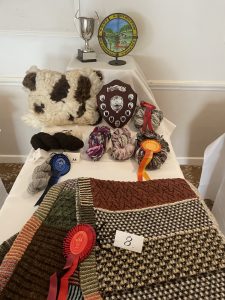
Each year the Jacob Sheep Society has it 'Wool Cup' Competition. The judging of which usually happens at the annual AGM.
Any JSS member or group of members may enter one or more items (or matched sets of items) which demonstrate skilful and imaginative use of Jacob fleece. This means that the outstanding feature of the item must be, or be made from, Jacob fleece.
Any skill can be used to transform the Jacob fleece – knitting, crochet, weaving, spinning, tapestry, felt, embroidery, macramé, fleecy sculptures, fleecy pictures – whatever you chose.
Entries for the Wool Cup do not have to be crafted by a JSS member. Any member can submit items made by a non-member as long as the entry uses fleece from the member's flock
The Wool Cup event will be divided into two sections. The first section will be for the award of the Wool Cup to the best group of three or fewer items (a matched set counts as one item), selected to represent the Region. Your Regional Contact Member will be able to tell you how the Regional group will be selected.
When the winning group for the Wool Cup has been chosen, the remaining Regional items crafted by a JSS member will be judged alongside the items submitted by individual JSS members. The winner will be presented with the Dutch Cup, and rosettes will be awarded to the highest placed runners-up.
All the Regional and individual entries for the Wool Cup crafted by a JSS member will be judged together for the Lady Aldington Memorial Trophy. This trophy will be awarded to the item that has the most novel, quirky or unusual design.
The Aileen Kennedy Trophy will be awarded for the best skein of Jacob yarn that has been hand spun by a JSS member using fleece from their own flock. The yarn can be any natural Jacob colour, or mix of natural colours, and must be plied – the type of ply is your choice. Up to 10% by weight of another fiber, for example silk, can be included. Additional fiber can be dyed, but the Jacob must be its natural colour.
The event is not only an opportunity to show skill and imagination in transforming Jacob fleece into a decorative or practical item, it’s also an opportunity to get a financial reward. Any item can be offered for sale; as is usual at Society sponsored events, a 10% commission will be deducted from the proceeds of sale.
2026 Wool Cup
Join Us for the Wool Cup at the Jacob Sheep Society Annual General Meeting!
The judging for the Wool Cup, the Lady Aldington Memorial Trophy and the Aileen Kennedy Trophy will commence at 5.00 pm on the evening of Saturday April 25th 2026 at the Jacob Sheep Society Annual General Meeting at the Crathorne Hall Hotel, Crathorne, Yarm, North Yorkshire, TS15 0AR
Don't miss the entry deadline on July 1st. You can find all the details and entry requirements on the Wool Cup entry form (Click here). If you'd like to enter but are unable to attend the dinner, please reach out to us at to discuss alternative submission options.
Unleash Your Creativity with Jacob Wool
Jacob wool's dye-free colours and bouncy texture make it a crafter's dream—transform raw fleece into heirlooms with minimal effort. Start with our beginner-friendly projects and scale up to showstoppers worthy of the society's prestigious Wool Cup.
- Felted Brooches & Accessories: Use raw fleece scraps for quick wet-felting; the natural gradients create ombre effects. Materials: Dish soap, warm water, bubble wrap. Time: 30 mins. Perfect for markets or gifts.
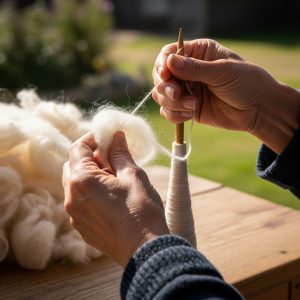
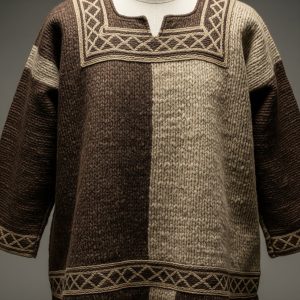
- Hand-Spun Skeins for Knitwear: Spin on a drop spindle for Fair Isle patterns—blend browns for subtle greys. Tip: Card first to remove vegetable matter. Yields lofty yarns for cosy Aran sweaters.
- Macramé Wall Hangings: Knot roving for boho décor; the springiness holds fringes without sagging.
- Tapestry Weaving: The medium staple excels in detailed landscapes—warp with Jacob for textured depth.
- Advanced: Fleecy Sculptures: Needle-felt whimsical sheep or rams; enter our Wool Cup's quirky category, like last year's prizewinning ram throw.
Join society spinning or wool working workshops or submit your makes to our gallery via the email —past Wool Cup stars, like the Lady Aldington Memorial Trophy winner, showcase Jacob's magic.
Wool Processing: A source for mills and other processors
Wool Directory
The table of contacts below gives the contact details for organisations, groups, societies and individuals who work with wool in a variety of ways.
The contacts are all involved with wool either by promoting it, processing wool, producing wool from their own sheep or through the involvement in crafts such as spinning, knitting, weaving, dying or felting.
Many of the contacts in the table below also produce woollen items for sale, provide tuition or run craft workshops. We hope that you find the contacts on this list useful. Please click on the name of the producer to be taken to their website.
| Name | Location | Details |
|---|---|---|
| Organisations, Groups & Societies | ||
| Wool Marketing Board | United Kingdom | The official controlling body of wool marketing. |
| The Association of Guilds of Weavers, Spinners & Dyers | United Kingdom | Large organisation with many local branches. A source of tuition & possibly outlets for your wool. |
| British Coloured Sheep Breeders Association | United Kingdom | Promotes coloured sheep & the use of coloured wool. |
| The Arkwright Spinsters | Sir Richard Arkwright's Cromford Mill, Matlock, Derbyshire | A spinning & fibrecraft group. They meet on the third Sunday of each month between 11.00 am & 4.00 pm. |
| Black Sheep Spinners | Blaze Farm, Wildboarclough, Derbyshire | Informal spinning group. They meet on the third Wednesday of each month. |
| Craft Centres, Tuition & Courses | ||
| Lindsay Roberts | Chesters, Scottish Borders | Handspun yarn, fibres, tuition & workshops. |
| Brenda Howell | Newcastle Emlyn, Wales | Spinning, weaving, dying & felting, wools & woven goods. Demonstrations & illustrated talks. |
| Thelma Jones | St. Clears, Carmarthen, Wales | Studio on a rare breeds farm, local artists on display. |
| Sylvia Sexton | Moylegrove Village, Pemrbrokeshire, Wales | Spinning & weaving equipment, tuition. Craft studio with hand knits & hand woven items. |
| Wingham Wool Work | Wentworth, South Yorkshire | Tuition, fibres, yarns & equipment for sale. |
| The Threshing Barn | Leek, Staffordshire | Tuition, fibres, yarns & equipment for sale. |
| Diane Fisher | North Derbyshire | Tuition, handspun yarns, demonstrations & commissions considered. |
| Processors | ||
| The Natural Fibre Company Ltd. | Launceston, Cornwall | Woollen & worsted spinners, organic processors & dyers. |
| Curlew Weavers | Newcastle Emlyn, Wales | Mill, producers of woollen fabrics & products in tweed. |
| Bobtails | East Riding of Yorkshire | Fleeces & pet hair handpspun & can also be hand knitted. |
| Griffiths' Mill | Derbyshire Dales | Processors of fleece, scouring & carding. Often processed fibre & fleeces for sale. |
| Halifax Spinning Company | Goole, East Riding of Yorkshire | Spinning & processing of fleece. |
| New Lanark Mill | Lanarkshire, Scotland | Processors, spinners & dyers of organic wool. Organic farmers welcome as trade customers. Soil Association accredited |
| Other | ||
| Skye Skyns | Isle of Skye, Scotland | Tanning of sheep skins available upon request |
The table of contacts above who work with wool in various ways are offered here in good faith for the convenience of members. The Jacob Sheep Society does not recommend or endorse any of the contacts.
The Beauty and Benefits of Jacob Sheep Wool
Forget boring old white sheep! Jacob sheep are like walking works of art, with stunning fleeces that are a dream for spinners and weavers. But their beauty isn't just skin deep!
Jacob wool is a treasure chest of natural colours, eliminating the need for harsh dyes. It's like working with a fluffy paintbrush! The wool itself is light, soft, and springy, with minimal lanolin (the natural oil that can make wool greasy). It comes in a range of textures, too, from tight curls to straighter strands.
These sheep are shorn once a year in the spring, and their wool is a medium-fine texture that hand spinners love. Especially if it's free of kemp, which are those coarse, stubborn hairs that just won't spin.
The real magic happens with the colours, though! Each Jacob sheep is a unique blend of dark brown and white. Some fleeces are almost all brown, while others are mostly white with just a splash of brown. This lets spinners separate the colours or blend them together, creating a whole rainbow of gorgeous yarns. From soft greys to almost black, the possibilities are endless! So, if you're looking for beautiful, versatile wool with endless colour options, Jacob sheep are the perfect flock to admire (and maybe even raise)!
British Wool Marketing Board Grades
- 350 - Selected (Fine) Bradford Count 54 – 58
- Micron Count 25 - 27.5
- 351 – Jacob Bradford Count 46 – 52
- Micron Count 30 – 33
- Staple Length 75mm to 18Omm (3' to 7)
- Good degree of springiness
- Average weight of fleece 2 - 3 kgs (4 - 6 Ibs)
Skins & Horns: Information on what to do with these by-products and who processes them.
The Jacob Sheepskin: A British Heritage Icon
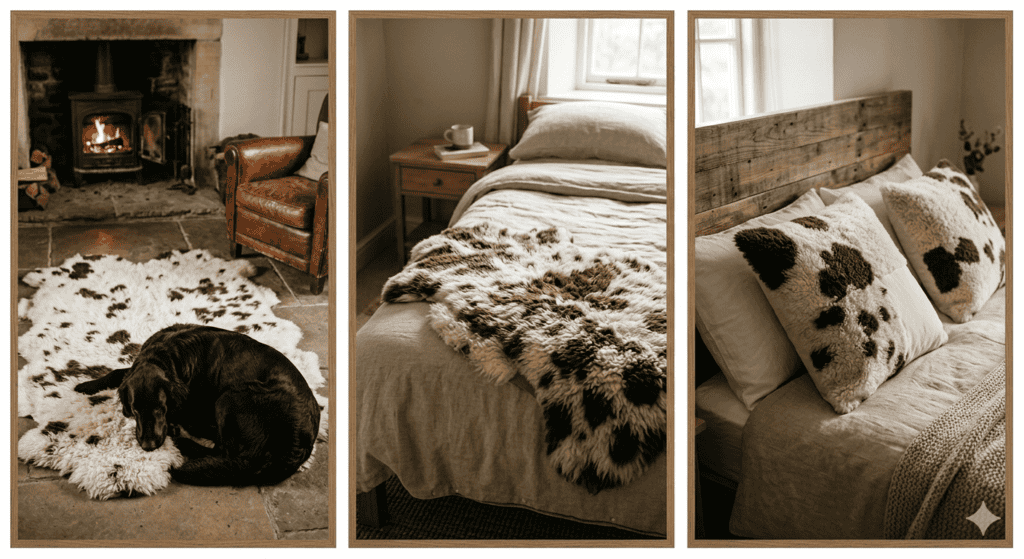
The Jacob sheep is one of the most visually striking breeds found across the British Isles. Easily identified by their prehistoric appearance and multiple horns, it is their "piebald" (spotted) fleece that makes their skins a premium choice for the home. Because these skins are a natural byproduct of the agricultural industry, tanning them is a sustainable way to celebrate the animal while creating a high-value, functional heirloom.
Why Jacob Sheepskins are Prized
Unlike many commercial breeds bred for uniform white wool, the Jacob maintains a "primitive" coat. This results in several unique characteristics:
-
Natural Patterns: No two Jacob skins are identical. They feature a dramatic, random mix of cream and dark chocolate (or "black") spots.
-
Tactile Texture: The wool is generally medium-grade, meaning it is soft enough for bare skin but robust enough to withstand being used as a floor rug.
-
Natural Crimp: The fibres possess a natural "spring," making the skins exceptionally comfortable for seat pads or bed throws.
Common Uses in the UK
Jacob skins are versatile and highly sought after by interior designers and craftspeople:
-
Decorative Rugs: Their bold, organic patterns make them ideal "statement pieces" for hardwood floors or draped over sofas.
-
Soft Furnishings: They are frequently used to create luxury cushion covers, footstool toppers, and bench liners.
-
Country Clothing: Tanned Jacob leather is prized for its durability, while "shearling" (wool-on) is used for traditional gilets, hats, and slippers.
-
Spinning & Felting: For those not tanning the whole skin, the wool is a favourite for hand-spinners who blend the dark and light patches to create unique natural grey yarns.
Where to Get Skins Processed in the UK
If you are a smallholder or have acquired a "green" (raw) skin, it must be professionally tanned to preserve it. There are only a few specialist tanneries left in the UK that offer "contract tanning" for individuals:
| Tannery | Location | Speciality |
| Devonia Sheepskins | Buckfastleigh, Devon | Britain’s oldest sheepskin tannery. They offer a traditional "contract dressing" service for individual skins. |
| Welsh Organic Tannery | Whitland, Carmarthenshire | Perfect for the eco-conscious; they specialise in organic, chrome-free tanning using traditional bark methods. |
| Skyeskyns | Isle of Skye, Scotland | A world-renowned craft tannery that accepts skins for processing via courier. They are experts in rare-breed finishes. |
| Fenland Sheepskin | Bridgwater, Somerset | A major name in British sheepskin, though it is best to contact them regarding current capacity for individual skins. |
'Devonia Sheepskins' have provide the following information to download on preparing your skins - Click here to download
Crucial Advice for Processing:
If you are sending a skin for tanning, it must be salted immediately after the animal has been slaughtered and fleeced. Use a heavy layer of hide salt (not fine table salt) to draw out moisture and "set" the wool. Most tanneries will refuse "green" skins that have not been properly salted for transit.
Sourcing Finished Jacob Skins
If you prefer to buy a finished product, several UK-based retailers specialise in British-tanned Jacob rugs:
-
The Dartmoor Shepherd: Known for skins sourced directly from their own Devon flocks.
-
Lambland: A heritage brand based in North Devon with a wide selection of Jacob products.
-
The Jacob Sheep Society: Their regional representatives can often point you toward local breeders who sell finished skins at farm-gate prices.
Crafted from Heritage – Jacob Horn Walking Sticks
Jacob sheep's spiralled horns aren't just striking—they inspire enduring crafts. Ethically sourced post-life, these horns are steamed, shaped, and fitted to ash or hazel shafts for bespoke walking aids that blend function and folklore.
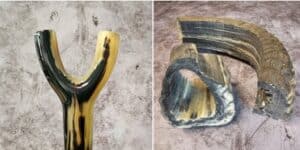
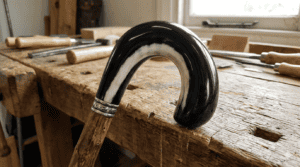
Crafted by UK artisans, each stick is unique: lengths 90–130cm, weights ~500g, with natural curves for ergonomic grip. Makers like Gordon Bottomley, whose animal-head crooks (£150+) evoke shepherd traditions, or Lord's Country Sticks' thumbsticks (£350 bespoke), prized by Guild of Stickmakers.
"The horn's spiral makes every piece an heirloom," shares one maker.
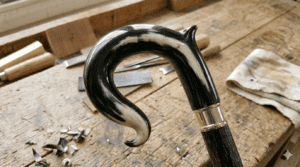
Uses range from daily walks and shepherd's crooks at shows to decorative market sticks—rarer than common breeds, they're a nod to Jacob heritage.
Beyond the Basics – Versatile Jacob Applications
Jacob wool's adaptability shines beyond yarn—explore sustainable, innovative uses that honour the breed's full potential.
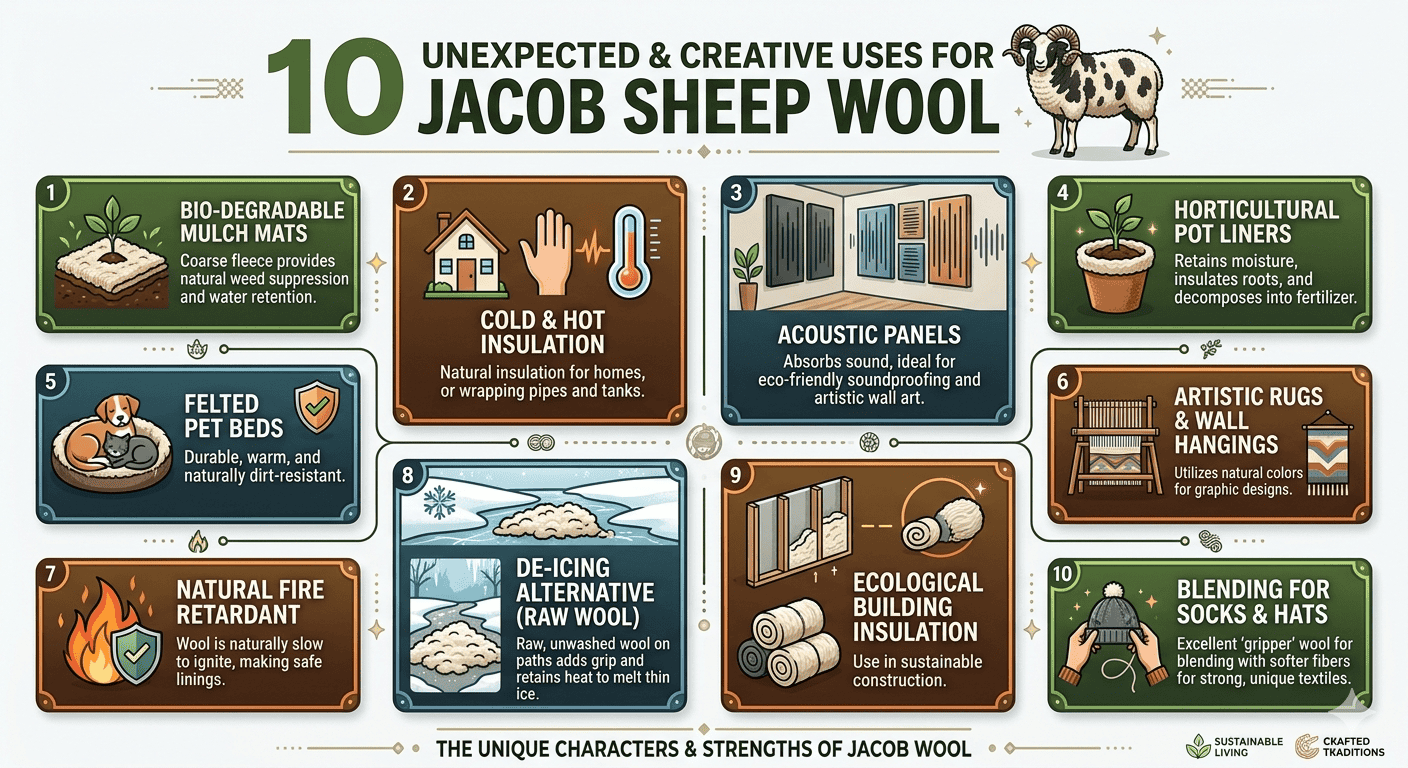
- Eco-Home Solutions: Loft batts for green insulation (rivals synthetics in warmth); natural mattress toppers for allergy-friendly sleep—low lanolin means less dust.
- Art & Decor: Wet-felt wall panels or sculptures; weave tapestries of Jacob history from society archives.
- Farm & Pet Essentials: Fleece bedding for livestock or stuffed dog toys—durable, odour-resistant, and biodegradable.
- Luxury Blends: Mix 10% silk for shimmering scarves; upcycle scraps into eco-packaging.
As a heritage breed, Jacob wool aids conservation—zero-waste tip: Compost trimmings for nutrient-rich mulch. See our "10 Unexpected Uses" infographic for inspiration.